Selective Beta-3 Adrenergic Agonism: Comparing HGH Fragment 176-191 and Adipotide in Target-Specific Adipocyte Research
Discover the differences between the fat-mobilizing HGH Fragment 176-191 and the fat-destroying Adipotide. We break down the science of selective beta-adrenergic vs. apoptotic pathways for consumers.
For anyone navigating the world of research peptides, the terminology can get dense quickly. You might hear about "lipolysis," "apoptosis," "agonists," and "receptors." But if you are interested in wellness and body composition, what you likely really want to know is: What is the most effective way to target stubborn body fat?
In the landscape of fat-loss peptides, two names often come up in heated debates: HGH Fragment 176-191 and Adipotide. While both are researched for their ability to reduce adipose tissue (body fat), they work in fundamentally different ways.
This article dives into the fascinating science behind these two compounds. We will explore how HGH Fragment 176-191 acts as a metabolic "key," specifically mimicking the body's natural fat-burning signals (often linked to beta-3 adrenergic pathways), and compare it to Adipotide, which works more like a targeted demolition crew against the blood vessels feeding fat cells.
Whether you are researching for optimization, recovery, or general weight management knowledge, understanding these mechanisms can help you make informed decisions about quality and application.
The Basics: Why "Targeted" Fat Loss is So Hard
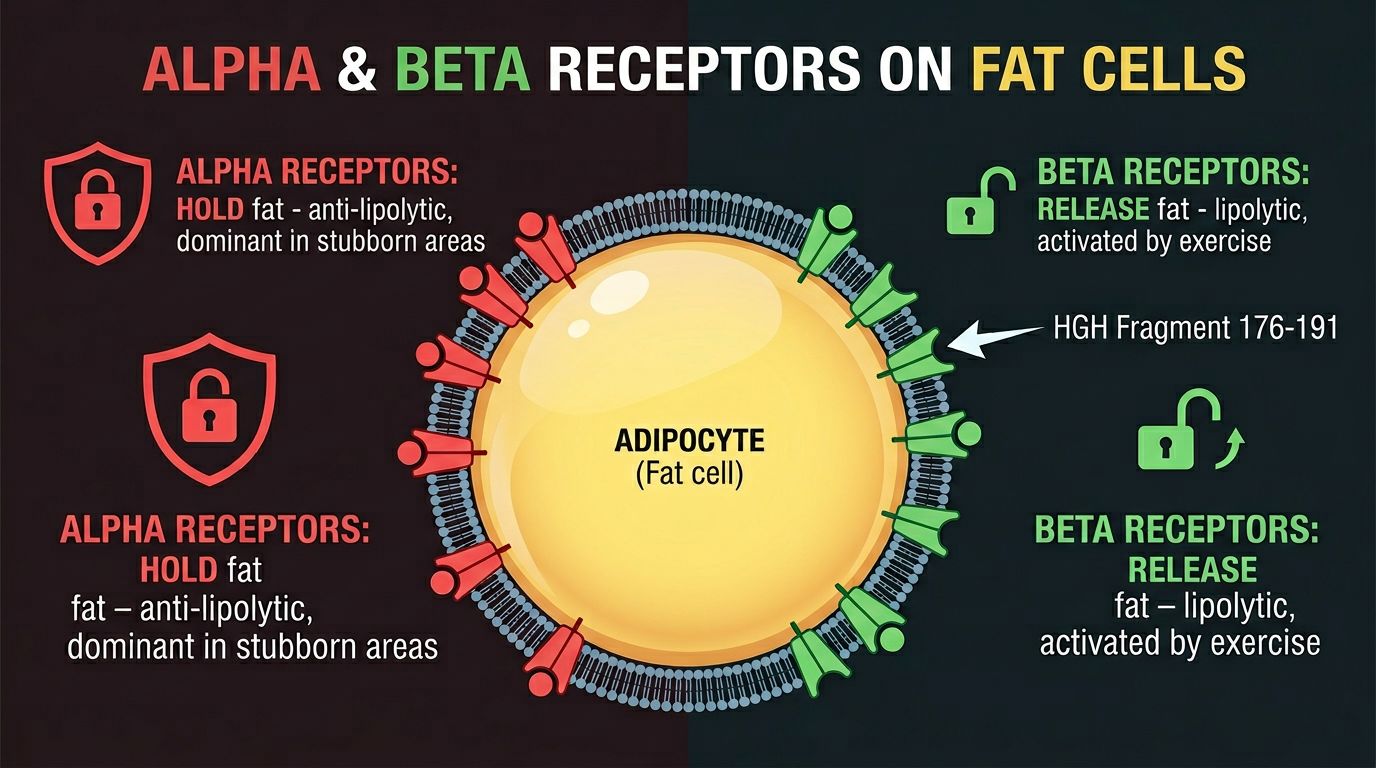
Before jumping into specific peptides, it helps to understand why losing fat—specifically in "stubborn" areas like the midsection or lower body—is so difficult. Fat cells (adipocytes) aren't just storage sacks; they are biologically active tissues influenced by hormones. They have "receivers" on their surface called receptors.
- Alpha Receptors: These essentially tell the fat cell to hold onto fat (anti-lipolytic). Stubborn fat areas usually have a high density of alpha receptors.
- Beta Receptors: These tell the fat cell to release fat for energy (lipolytic). This is the "burn" switch.
When you exercise, your body releases adrenaline, which hits these beta receptors to mobilize energy. However, standard weight loss affects the whole body. The "holy grail" of peptide research has been finding compounds that trigger these release switches specifically, without causing jitters, anxiety, or systemic stress.
The Contender Comparison
| Feature | HGH Fragment 176-191 | Adipotide (FTPP) |
|---|---|---|
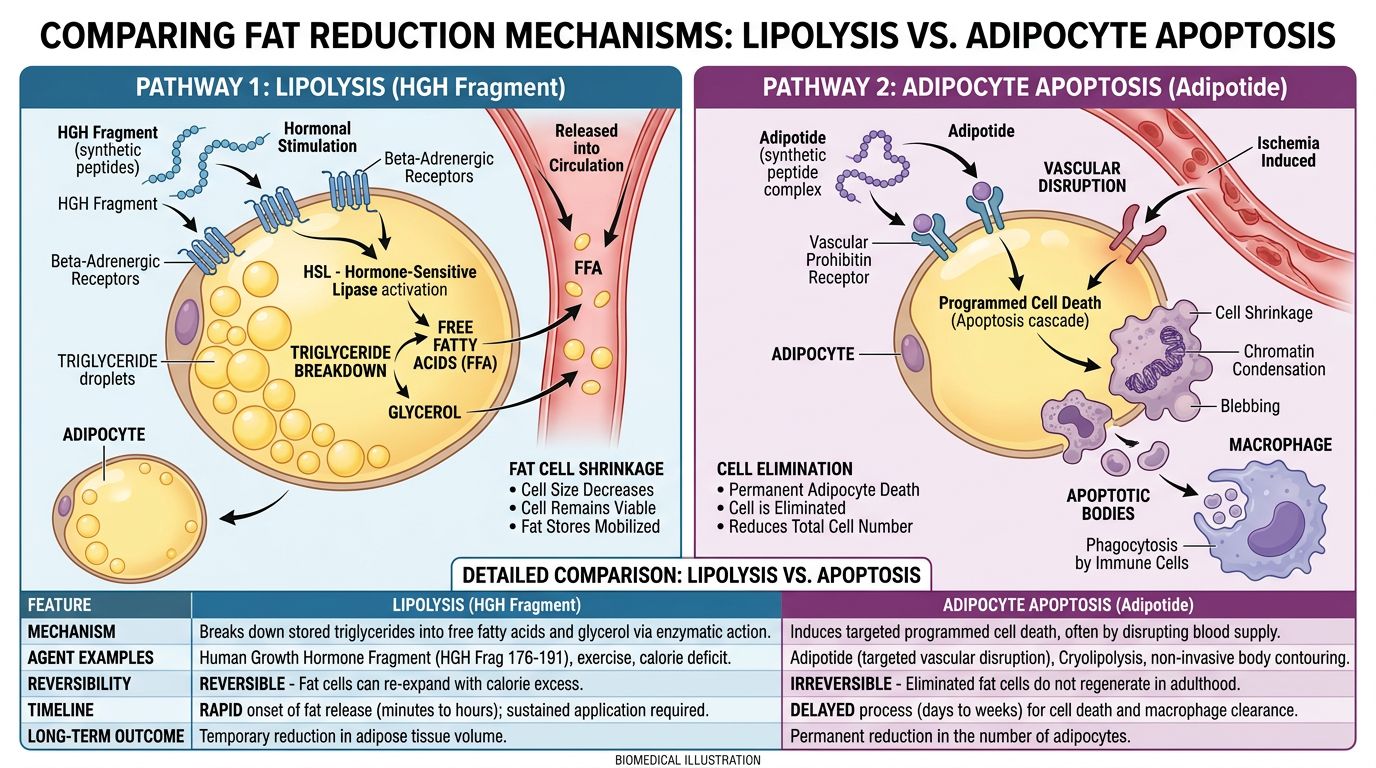
| Primary Mechanism | Lipolysis: Triggers release of stored fat for energy. | Apoptosis: Cuts off blood supply to kill fat cells. |
| Action Style | Mimics natural Growth Hormone fat-burning distinct from growth effects. | Targeted vascular attack on white adipose tissue. |
| Target | Adipocyte metabolic receptors (Fat Mobilization). | Prohibitin receptor in blood vessels (Vascular Starvation). |
| Research Focus | Metabolic optimization, visceral fat reduction. | Rapid mass reduction, obesity research. |
HGH Fragment 176-191: The Metabolic Precision Tool
HGH Fragment 176-191 is a modified form of the amino acids 176 through 191 of the human growth hormone (HGH) polypeptide. Why slice up the HGH molecule? Because standard HGH does a lot of things: it grows muscle, repairs tissue, but also can raise blood sugar and cause water retention.
Researchers discovered that the specific fat-burning power of HGH resides in the "tail end" of the molecule. By isolating just this fragment, they created a compound that appears to strongly stimulate lipolysis (the breakdown of fat) and inhibit lipogenesis (the formation of new fat) without the side effects of full HGH, like insulin resistance.
The "Beta-3" Connection
While HGH Frag doesn't stimulate beta receptors exactly like adrenaline does (which is why it doesn't give you the "jitters"), its effects on lipid metabolism mirror the pathway of selective beta-3 adrenergic agonism. In simple terms:
- It mimics the signal that tells fat cells to dump their cargo.
- It targets the oxidative pathway, encouraging the body to use fat as its primary fuel source.
- It avoids the "alpha" signals that tell the body to store fat.
This makes HGH Fragment 176-191 highly desirable for those looking to "lean out" while preserving muscle. It essentially unlocks the energy stored in fat cells so your metabolism can use it.
Benefits Observed in Research
- Visceral Fat Targeting: Studies suggest it is particularly effective at mobilizing adipose tissue in the abdomen.
- No Glycemic Impact: Unlike full HGH, it does not negatively impact blood glucose levels.
- Cartilage & Recovery: While primarily for fat loss, some overlap with general recovery is noted, especially when paired with compounds like BPC-157 + TB-500 Blend.
Adipotide: The Vascular "Starvation" Mechanism
On the other side of the ring is Adipotide, also known as FTPP (Fat Targeted Pro-Apoptotic Peptide). If HGH Frag is a key that unlocks the door to fat loss, Adipotide is a battering ram.
Adipotide works on a completely different principle called apoptosis. Apoptosis is programmed cell death. Adipotide is designed to target a specific protein called prohibitin that is found uniquely in the blood vessels that feed white body fat.
How It Works
White fat tissue requires a constant blood supply to survive. Adipotide binds to the vasculature of these fat cells and disrupts it. Without a blood supply, the fat cells cannot survive, so they shrink and die. The body then metabolizes the cellular debris.
This is distinct from HGH Frag because HGH Frag leaves the fat cell alive—it just empties it of its contents (lipids). Adipotide attempts to reduce the actual number of fat cells.
The "Prohibitin" Specificity
The innovation of Adipotide is its specificity. It targets blood vessels supplying fat, but largely ignores blood vessels in other tissues. This "lock-and-key" mechanism allows for rapid reduction in fat mass in animal models. However, because it involves processing dying cell matter, it puts a higher load on the kidneys, making proper hydration and research protocols critical.
Head-to-Head: Which Approach Suits Which Goal?
When consumers investigate these peptides, the choice often comes down to their specific goals: Optimization vs. Transformation.
1. For the "Final Polish" & Energy: HGH Fragment 176-191
HGH Frag is often the go-to for individuals who are already somewhat active and looking to break through a plateau. Because it mobilizes stored energy, it pairs beautifully with exercise. When you use HGH Frag, you are releasing fuel into the bloodstream—you still need to burn that fuel (move your body) to see the best results.
It acts gently on the system compared to Adipotide. It’s about shifting the metabolic preference toward increased oxidation (burning). This makes it a popular choice for long-term body composition maintenance.
2. For Significant Mass Reduction: Adipotide
Adipotide is researched for more drastic weight reduction scenarios. Because it physically destroys the support system of fat tissue, it can lead to rapid changes in body composition independent of exercise intensity (though lifestyle always matters).
However, the mechanism is "harsher." The body has to clean up the aftermath of the apoptotic fat cells. This places Adipotide in a category of advanced research applications where careful monitoring is required.
Synergy in Research: The Best of Both Worlds?
Many enthusiasts look into "stacking"—utilizing multiple peptides to attack a problem from different angles. Since HGH Fragment 176-191 and Adipotide work via completely different pathways, they are sometimes discussed together in advanced protocols.
However, a more common and often safer synergy involves pairing HGH Frag with other metabolic enhancers:
- CJC-1295 & Ipamorelin: These stimulate the natural pulse of growth hormone. Added to HGH Frag, you get the repair and sleep benefits of GH along with the amplified fat burning of the fragment. We offer versatile options like CJC-1295 to support this pathway.
- AOD9604: Similar to HGH Frag but with a slightly different molecular structure, AOD9604 is another reliable lipolytic peptide often used for weight management.
- Tesamorelin: Known for broadly reducing visceral fat in clinical settings, Tesamorelin is a potent GHRH often compared to HGH Frag for abdominal targeting.
Quality Assurance: The Critical Factor
Whether researching the precision lipolysis of HGH Fragment 176-191 or the apoptotic power of Adipotide, purity is non-negotiable. Research peptides are chemically complex. Impurities can lead to injection site reactions or reduced efficacy.
At Alpha Carbon Labs, we emphasize transparency. Every batch we supply undergoes rigorous HPLC (High-Performance Liquid Chromatography) and MS (Mass Spectrometry) testing to ensure you are researching with exactly the molecule stated on the label—nothing more, nothing less. You can verify our standards by visiting our Quality Control page to see how we validate our catalog.
Practical Considerations for Researchers
If you are exploring these peptides, here are the practical takeaways regarding their administration in a research setting:
Timing Matters
For HGH Fragment 176-191, timing is everything. Because it mobilizes fat for fuel, it is most effective when insulin levels are low (fasted state) and when physical activity follows. Insulin is the "storage" hormone; if insulin is high (after a meal), it blunts the "release" signal of the peptide.
Hydration is Key
For Adipotide, hydration is the primary safety concern. The breakdown of vascular and lipid cells releases metabolic waste that the kidneys must filter. High water intake is a mandatory component of research protocols involving Adipotide to protect renal function.
Conclusion: Mobilization vs. Elimination
The choice between HGH Fragment 176-191 and Adipotide largely depends on the intent of the research.
HGH Fragment 176-191 represents the metabolic shifting approach. It is about convincing the body to unlock its reserves, mimicking the natural "Beta-3" adrenergic burn without the systemic stress of stimulants. It is ideal for "cutting," leaning out, and optimizing metabolic flexibility.
Adipotide represents the structural modification approach. It doesn't ask the fat cell to release energy; it alters the biological landscape to make it impossible for those fat cells to thrive. It is a more aggressive tool for reducing white adipose tissue mass.
Both compounds highlight the incredible potential of peptide science to offer targeted, mechanism-specific solutions that traditional diet and exercise sometimes struggle to achieve alone. By understanding the "why" and "how" behind these molecules, you are better equipped to pursue your wellness and research goals effectively.
Ready to explore premium-grade peptides for your research? Browse our verified catalog, including Semaglutide and other metabolic agents, at Alpha Carbon Labs.
References
- 1. Heffernan, M., et al. (2001). "The Effects of Human Growth Hormone Fragment 176-191 on Lipid Metabolism and Body Weight in Obese Mice." Endocrinology.
- 2. Barnhart, K. F., et al. (2011). "A Peptidomimetic Targeting White Fat Causes Weight Loss and Improved Insulin Resistance in Obese Monkeys." Science Translational Medicine.
- 3. Ng, F. M., et al. (2000). "Metabolic Studies of a Synthetic Lipolytic Domain (AOD9604) of Human Growth Hormone." Journal of Molecular Endocrinology.
- 4. Kim, D. H., et al. (2020). "Peptide-Based Drug Delivery Systems for Cancer Treatment." Archives of Pharmacal Research. (Contextual citation on peptide mechanisms targeting vasculature).
- 5. Westerterp, K. R. (2004). "Diet, Physical Activity and Adiposity." The American Journal of Clinical Nutrition.
- 6. Giustina, A., & Veldhuis, J. D. (1998). "Pathophysiology of the Neuroregulation of Growth Hormone Secretion in Experimental Animals and the Human." Endocrine Reviews.
- 7. Perrini, S., et al. (2008). "The Growth Hormone/Insulin-Like Growth Factor I Axis and the Cardiovascular System in the Metabolic Syndrome." Journal of Endocrinological Investigation.
- 8. Kolka, C. M., & Bergman, R. N. (2012). "The Barrier within: Endothelial Transport of Hormones." Physiology.
All research information is for educational purposes only. The statements made within this website have not been evaluated by the US Food and Drug Administration. The statements and the products of this company are not intended to diagnose, treat, cure or prevent any disease.