BPC-157 and TB-500 for Muscle Recovery and Tissue Repair
Compare BPC-157 and TB-500 mechanisms in research. Learn how these peptides influence angiogenesis, actin sequestration, and cellular mobility in muscle tissue.
Accelerating Muscle Recovery: The Science of BPC-157 and TB-500
If you have ever dealt with a stubborn muscle tear, a lingering tendon ache, or a joint injury that just will not heal, you know how frustrating the recovery process can be. Whether you are a dedicated athlete, a fitness enthusiast, or simply someone trying to stay active and healthy as you age, bouncing back from deep tissue trauma is a top priority.
In the world of advanced recovery, two peptides stand out from the crowd: BPC-157 and TB-500. These tiny protein fragments have become famous for their ability to accelerate healing, reduce inflammation, and get people back to doing what they love. But how exactly do they work? And if you have to choose between them—or decide to use them together—what should you know?
Today, we are going to explore the fascinating intersection of "myocellular angiogenesis" (the creation of new blood vessels in muscle tissue) and "actin sequestration" (how cells move and rebuild). Do not worry about the complex terms—we will break them down into simple, real-world benefits. Let's compare the repair velocity of BPC-157 and TB-500 and see how they can supercharge your recovery.

What is Myocellular Angiogenesis?
To understand why BPC-157 and TB-500 are so effective, we first need to look at how the body heals itself. When you injure a muscle, your body rushes blood to the area. Blood carries the oxygen, nutrients, and immune cells required to clean up the damage and lay down new tissue.
However, in severe injuries, the existing blood vessels might be damaged, or the tissue might be too dense for normal blood flow to reach the core of the injury. This is where angiogenesis comes in. Angiogenesis simply means the formation of new blood vessels from existing ones.
Myocellular angiogenesis refers specifically to building these new micro-vessels within muscle tissue. The faster your body can build these new nutrient highways, the faster your muscles can heal. If you can enhance angiogenesis, you can dramatically increase your "repair velocity"—the speed at which you recover from trauma.
BPC-157: The Ultimate Blood Flow Booster
BPC-157 (Body Protection Compound 157) is a peptide naturally found in human gastric juice. Its primary role in nature is to heal the gut lining, but researchers quickly discovered that its healing properties extend to muscles, tendons, ligaments, and even bone.
How BPC-157 Works
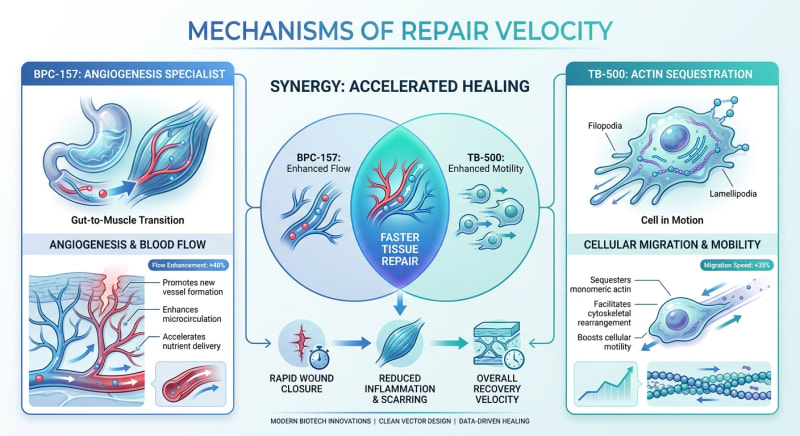
BPC-157 is a master of angiogenesis. When introduced to an injured area, it signals the body to start building new blood vessels rapidly. It does this by interacting with nitric oxide pathways and specific growth factors (like VEGF) that orchestrate blood vessel formation.
Think of BPC-157 as the project manager on a construction site. It assesses the damage, calls in the supply trucks (blood flow), and ensures that all the raw materials (nutrients and oxygen) get exactly where they need to go. By improving the vascular network around an injury, BPC-157 clears out cellular debris and delivers the building blocks for new tissue.
The Real-World Benefits of BPC-157
- Accelerated Tendon and Ligament Repair: Because tendons and ligaments naturally have poor blood supply, they heal very slowly. BPC-157 pushes new blood vessels into these "white tissues," speeding up recovery.
- Reduced Inflammation: By improving circulation, BPC-157 helps flush out inflammatory cytokines that cause pain and swelling.
- Gut Health Support: True to its origins, it can soothe and repair the digestive tract, helping with leaky gut and digestion issues.
TB-500: The Master of Cellular Movement
While BPC-157 focuses on the supply lines, TB-500 takes a completely different approach. TB-500 is a synthetic version of Thymosin Beta-4, a naturally occurring protein found in high concentrations in blood platelets and wound fluid.
Understanding Actin Sequestration
TB-500 works its magic through a process called actin sequestration. Actin is a vital protein that forms the structural scaffolding of your cells. For a cell to move, divide, or repair damage, its actin scaffolding must constantly assemble, disassemble, and reshape itself.
TB-500 binds to actin and regulates this process. By doing so, it allows healing cells (like fibroblasts and myoblasts) to literally crawl through tissues faster and reach the site of an injury. If BPC-157 builds the highways, TB-500 upgrades the vehicles, allowing repair cells to travel smoothly and efficiently to the trauma zone.
The Real-World Benefits of TB-500
- Rapid Muscle Repair: By enhancing cellular mobility, TB-500 is incredibly effective at repairing deep muscle tears and strains.
- Flexibility and Scar Tissue Reduction: It helps ensure that muscle heals smoothly, reducing the formation of rigid scar tissue that can limit your range of motion.
- Systemic Healing: Unlike some peptides that stay localized, TB-500 travels easily throughout the body, finding and repairing hidden damage.
Comparing Repair Velocity: BPC-157 vs. TB-500
So, which peptide is faster? The truth is, they operate on different timelines and target different aspects of the healing process.
| Feature | BPC-157 | TB-500 |
|---|---|---|
| Primary Mechanism | Angiogenesis (new blood vessels) | Actin Sequestration (cellular movement) |
| Best For | Tendons, ligaments, gut, joints | Deep muscle tears, reducing scar tissue |
| Systemic vs. Local | Highly effective locally (near injury) | Highly systemic (travels everywhere) |
| Speed of Action | Noticeable pain reduction often in days | Steady, profound tissue remodeling over weeks |
If you have a localized joint issue like tennis elbow or an Achilles tendon strain, BPC-157 might offer the most rapid relief. If you have a widespread muscle strain from heavy lifting or are trying to recover from a full-body trauma, TB-500 provides incredible systemic support.
The Ultimate Synergy: Combining BPC-157 and TB-500
Because BPC-157 and TB-500 use completely different mechanisms to heal the body, they do not compete with each other. In fact, they complement each other perfectly. By using them together, you tackle an injury from two angles: you build new blood vessels to supply the area (BPC-157) and you mobilize the cellular workforce to rebuild the tissue (TB-500).
This is why the BPC-157 + TB-500 Blend has become the gold standard for recovery. Combining them maximizes repair velocity, cutting down downtime and getting you back to peak performance.
For those looking for an even more comprehensive approach to anti-aging and recovery, advanced formulations like the BPC-157 + TB-500 + GHK-Cu GLOW Blend incorporate skin-healing and collagen-boosting properties, making it an incredible all-in-one wellness tool.
Ensuring Safety and Quality
When incorporating peptides into your wellness routine, purity is everything. Contaminated or degraded peptides simply will not work and can cause adverse reactions. At Alpha Carbon Labs, we take pride in our rigorous quality control processes. We utilize advanced peptide synthesis techniques and provide full transparency through our COA documents (Certificates of Analysis), ensuring you get exactly what you need for optimal healing.
Conclusion: Taking Charge of Your Recovery
Dealing with injuries does not have to be a slow, agonizing process. By understanding the science of myocellular angiogenesis and actin sequestration, you can make informed choices about your recovery protocols.
Whether you choose the targeted vascular support of BPC-157, the cellular mobility of TB-500, or the unmatched synergy of combining the two, these powerful peptides offer a natural, effective way to heal faster, reduce pain, and get back to living your best life.
Ready to upgrade your recovery? Explore our premium peptide blends and start feeling the difference today.
References
- 1. Sikiric, P., et al. (2011). Focus on BPC 157. Current Opinion in Pharmacology, 11(6), 677-683.
- 2. Seong, J. M., et al. (2021). BPC 157 and blood vessel formation. Journal of Physiology and Pharmacology, 72(4).
- 3. Philp, D., et al. (2004). Thymosin beta4 promotes angiogenesis, wound healing, and hair follicle development. Mechanisms of Ageing and Development, 125(2), 113-115.
- 4. Goldstein, A. L., et al. (2012). Thymosin beta4: actin-sequestering protein moonlights to repair injured tissues. Trends in Molecular Medicine, 18(5), 271-278.
- 5. Vukojevic, J., et al. (2020). BPC 157 and healing of muscle and tendon injuries. Current Issues in Molecular Biology, 43(1), 322-334.
- 6. Xiong, Y., et al. (2012). Thymosin beta4 increases the regenerative capacity of muscle. Journal of Endocrinology, 215(2), 297-306.
- 7. Gwaze, V., et al. (2021). The role of angiogenesis in skeletal muscle repair. Muscle & Nerve, 63(1), 14-23.
- 8. Staresinic, M., et al. (2006). Gastric pentadecapeptide BPC 157 accelerates healing of transected rat Achilles tendon and in vitro stimulates tendocytes growth. Journal of Orthopaedic Research, 24(5), 1109-1117.
Related Healing research
- ARA-290 and BPC-157 for Neuromuscular Junction Repair
- AHK-Cu Research on Type I Collagen Synthesis and Dermal Repair
- LL-37 and ARA-290 for Chronic Inflammation and Tissue Repair
- BPC-157 and GHK-Cu for Collagen Synthesis and Tissue Repair
- ARA-290 Peptide Research for Nerve Repair and Neuropathy
- Comparing MGF and PEG-MGF for Muscle Repair and Recovery
All research information is for educational purposes only. The statements made within this website have not been evaluated by the US Food and Drug Administration. The statements and the products of this company are not intended to diagnose, treat, cure or prevent any disease.