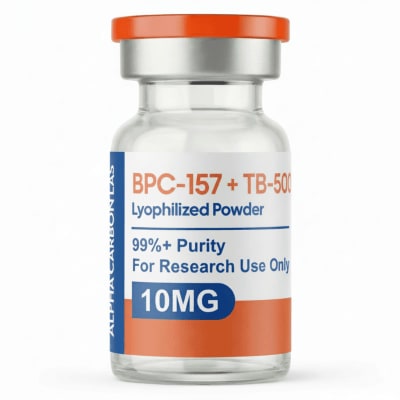
10mg (5mg/5mg)
Buy 3+ for $85.49 each and save 5%
Buy 5+ for $80.99 each and save 10%
Buy 10+ for $76.49 each and save 15%
This product is for research purposes only. Not for human consumption.
Purity: ≥99% (HPLC verified)
Formulation: Lyophilized powder blend
Molecular Formula: C62H98N16O22 + C212H350N56O78S
Molecular Weight: 1419.5 + 4963 g/mol
CAS Number: 137525-51-0 / 77591-33-4
PubChem CID: 9941957 / 16132341
BPC-157 + TB-500 Blend
Overview
This product is a blend of BPC-157 and TB-500 for laboratory research. BPC-157 (Body Protection Compound-157) is a 15-amino acid peptide derived from a protein found in gastric juice. TB-500 is the synthetic form of Thymosin Beta-4, a 43-amino acid peptide that plays roles in processes such as cell migration and tissue remodeling.
This blend combines two peptides with distinct mechanisms of action. BPC-157 has been observed in laboratory models to influence angiogenesis and nitric oxide pathways. TB-500 has actin-regulatory functions that are involved in cellular movement and tissue organization.
The blend is intended for research applications where multiple aspects of tissue repair processes, from inflammation modulation and vascularization to tissue remodeling, are being studied simultaneously.
Mechanism of Action
This blend contains two peptides that operate through different molecular mechanisms, which have been studied for their roles in tissue repair and regeneration models.
BPC-157 Mechanisms
In laboratory studies, BPC-157 has been shown to upregulate vascular endothelial growth factor (VEGF), which is involved in angiogenesis. It has also been observed to modulate the nitric oxide (NO) system. The peptide has been reported to influence the expression of growth factors including fibroblast growth factor (FGF) and epidermal growth factor (EGF), while also affecting levels of pro-inflammatory cytokines like TNF-α and IL-6 in some models.
TB-500 Mechanisms
TB-500 is the synthetic version of Thymosin Beta-4. Its primary mechanism involves interaction with G-actin, sequestering monomeric actin to regulate cytoskeletal dynamics and cellular migration. This activity is a factor in cell motility observed in wound models. The peptide has been shown to activate certain cell survival pathways, including Akt signaling, promote stem cell recruitment and differentiation in some models, and upregulate matrix metalloproteinases (MMPs) involved in tissue remodeling.
Combined Mechanisms of Action
The combination of these peptides allows for the study of their different mechanistic inputs into biological processes, such as the influence on angiogenesis through VEGF upregulation and endothelial cell migration, modulation of inflammation via cytokine regulation, effects on cellular migration through actin regulation and growth factor stimulation, and matrix remodeling through MMP activity and collagen deposition.
Research Findings
Published nonclinical literature relevant to this material's molecular targets and experimental models is listed below for independent review. Findings involving other preparations or experimental systems should not be attributed to this research material.
Research Applications
- Angiogenesis and vascularization studies
- Cell migration and actin dynamics research
- Tissue repair and remodeling models
- Musculoskeletal injury models
- Tendon and ligament repair models
- Wound healing models
- Inflammation response studies
- Connective tissue repair models
Laboratory Handling & Limitations
This material is supplied solely for in vitro and other nonclinical laboratory research. It is not for human or veterinary use, consumption, administration, therapeutic use, or diagnostic use.
Laboratory Handling
Handle only in an appropriately equipped laboratory using applicable institutional procedures, personal protective equipment, and the storage conditions shown for the material. The purchaser is responsible for study design, handling controls, disposal, and regulatory compliance.
Research Limitations
Published observations involving other preparations, experimental systems, or study populations do not establish the identity, performance, or suitability of this research material for any particular experiment.
Scientific References
Research Use Only
This product is intended for research purposes only and is not for human consumption, therapeutic use, or diagnostic applications. Please ensure compliance with all applicable regulations and institutional guidelines.