≥99% Purity Verified by Third-Party Labs
    Free Shipping on Orders Over $100
    HPLC & Mass Spec 2X Tested
    Same Day Shipping on Orders Before 2PM EST Mon-Sat
    ≥99% Purity Verified by Third-Party Labs
    Free Shipping on Orders Over $100
    HPLC & Mass Spec 2X Tested
    Same Day Shipping on Orders Before 2PM EST Mon-Sat
    Research
    5/31/2026

    Methodological Calibration: Standardizing the Transition from Semaglutide to Tirzepatide in Longitudinal Research Models

    Stuck at a weight loss plateau? Discover the science and practical steps for safely transitioning from Semaglutide to Tirzepatide to reignite your metabolic wellness journey and break through stalls with ease.

    Alpha Carbon Labs Research Team

    Methodological Calibration: Standardizing the Transition from Semaglutide to Tirzepatide in Longitudinal Research Models

    What This Academic Title Actually Means for Your Wellness Journey

    If the title of this article sounds like something out of a dense post-doctoral thesis, don't worry. We believe in taking the highest level of nutritional, metabolic, and peptide science and breaking it down into terms that actually mean something to you. So, let’s translate "Methodological Calibration in Longitudinal Research Models" into plain English: we are talking about the smartest, safest, and most effective way to switch from Semaglutide to Tirzepatide.

    Over the last few years, the wellness and weight management spaces have been completely revolutionized by the introduction of GLP-1 receptor agonists. For many health-conscious adults, these tools have provided a physiological reset, turning down the noise of constant cravings and optimizing the way the body handles insulin and body fat. For a long time, Semaglutide was the undisputed king of this arena. But science never stops moving forward.

    Enter the next generation: dual-receptor agonists like Tirzepatide. As people progress in their wellness journeys—what researchers might call a "longitudinal model"—they sometimes hit a plateau. The weight stops shifting. The food noise slowly creeps back in. The metabolic machinery seems to have adapted to the baseline therapy. In these moments, making a strategic switch to a more advanced, dual-action peptide can be the exact catalyst needed to break through the stall and push forward toward peak optimization.

    But you can't just stop taking one compound on a Tuesday and start a completely different compound at maximum dosage on a Wednesday. There is an art and a science to the transition. Whether your goal is anti-aging, shredding stubborn adipose tissue, or simply optimizing your metabolic health for longevity, understanding how to calibrate your transition is just as important as knowing why you should do it in the first place.

    In this comprehensive guide, we will explore the core differences between these two powerhouse incretins, dissect the physiological reasons why plateaus happen, and provide a clear, step-by-step framework for making the switch without experiencing overwhelming side effects or losing the precious progress you’ve already made.

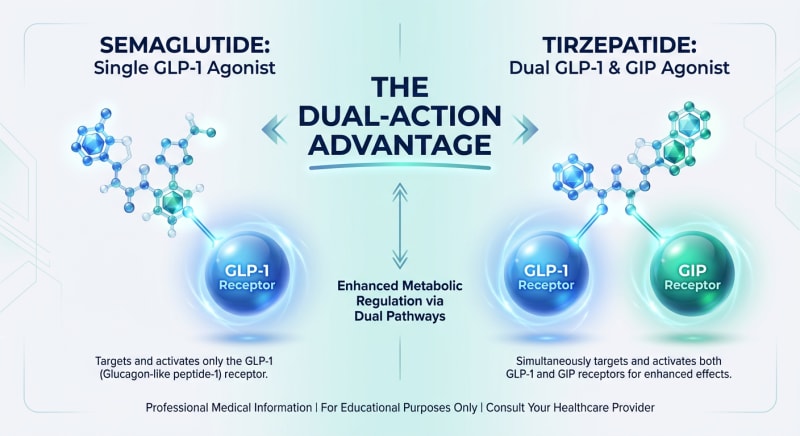
    A comparative infographic showing the mechanism of action differences between Semaglutide and Tirzepatide. Semaglutide is shown targeting the GLP-1 receptor, while Tirzepatide is shown targeting both GLP-1 and GIP receptors.
    Mechanism of Action: Single vs. Dual Receptor Agonism

    The Incretin Revolution: How Peptides Changed Weight Management

    Before we can talk about switching, it is essential to understand the foundation of what these unique compounds actually do. For decades, the mainstream approach to weight-loss and metabolic health could be summed up in a tired, overly simplified phrase: Eat less, move more. While a caloric deficit is scientifically necessary to lose weight, this advice completely ignores the complex biochemical reality of the human endocrine system.

    Your body is not a simple calculator; it is an incredibly complex chemical processing plant that defends its stored energy (body fat) with everything it has. When you restrict calories, your hunger hormones spike. When you lose weight, your resting metabolic rate drops. This survival mechanism is hardwired into our DNA.

    This is where "incretins" come into play. Incretins are metabolic hormones that the gut naturally secretes within minutes of eating an meal. Their primary jobs are to stimulate a decrease in blood glucose levels, slow down how fast the stomach empties, and signal to the brain that you are full. The therapeutic peptides designed around these hormones are game-changers because they address the root physiological causes of overeating and fat retention.

    Deep Dive: Understanding GLP-1 (The Single Agonist)

    The star of the first incretin wave was Glucagon-Like Peptide-1 (GLP-1). This natural hormone acts on several different systems in the body. First, it prompts the pancreas to release insulin in a glucose-dependent manner (meaning it doesn’t just blindly dump insulin into your system; it only does it when your blood sugar is rising). Second, and perhaps most importantly for the everyday wellness enthusiast, GLP-1 acts directly on appetite centers in the brain—specifically the hypothalamus.

    When you utilize a peptide like Semaglutide, you are introducing a long-acting synthetic version of this exact hormone. Semaglutide has an extended half-life, meaning it stays active in your system for about a week, providing constant, steady suppression of appetite and regulation of insulin. For millions of people, this peptide effectively installed a volume knob on their cravings, finally allowing them to turn the "food noise" completely down.

    The Upgrade: Understanding GLP-1 + GIP (The Dual Agonist)

    But human physiology contains more than just one incretin pathway. Along with GLP-1, there is another incredibly potent metabolic hormone called GIP (Glucose-Dependent Insulinotropic Polypeptide). For a long time, researchers weren't quite sure how to harness GIP effectively, as early studies suggested it might actually promote fat storage. However, modern scientific breakthroughs revealed something staggering: when you combine a GIP agonist with a GLP-1 agonist, the two molecules work synergistically to create a massive metabolic boost that far exceeds the sum of their parts.

    This is the foundation of Tirzepatide. Rather than just targeting a single receptor, this peptide is a "twin-incretin" or dual-agonist. If Semaglutide is like upgrading your car’s engine to a larger size, Tirzepatide is like adding a twin-turbocharger to that new engine. The addition of the GIP component does several remarkable things for health-conscious consumers:

    • Enhanced Fat Breakdown: GIP directly targets white adipose tissue (stored body fat), increasing lipid metabolism and preventing fat from being deposited in places it shouldn't be, like the liver or skeletal muscle.
    • Reduced Nausea: Because GIP has slightly anti-emetic (anti-nausea) properties, it helps blunt the common nausea often experienced when pushing GLP-1 dosages to their maximum limits. You get a stronger metabolic effect with a gentler gastrointestinal profile.
    • Better Glucagon Suppression: The dual action provides tighter, more stable control over blood sugar spikes, leading to more steady, focused energy throughout the day rather than the common post-meal crash.

    The Anatomy of a Plateau: Why Consider the Transition?

    If Semaglutide is so effective, why do so many people eventually find themselves researching "how to switch to Tirzepatide"? The answer lies in human evolution and a physiological phenomenon we refer to as metabolic adaptation.

    Imagine you begin a Semaglutide protocol. For the first few months, the results are likely incredible. The scale moves downward, your inflammation decreases, your clothes fit better, and you have effortless control over your dietary choices. But around month six, seven, or eight, things begin to stall. You haven't changed your diet. You're still actively moving. You are still taking your weekly protocol. So, why did the progress stop?

    1. Receptor Downregulation

    The human body loves homeostasis. It wants things to remain exactly as they are. When you constantly flood GLP-1 receptors with an agonist week after week, the body responds by downregulating those receptors. Essentially, it removes receivers from the cell membrane to quiet the signal. This means you eventually need a higher and higher dose just to achieve the same feeling of fullness or metabolic benefit. Once you hit the maximum tolerated dose of a single agonist, there's nowhere left to go.

    2. The NEAT Decline

    As you lose mass, your body requires fewer calories simply to exist. But beyond your basal metabolic rate (BMR), your brain also subconsciously limits your Non-Exercise Activity Thermogenesis (NEAT). NEAT includes things like fidgeting, pacing while on the phone, or adjusting your posture. Over time, as you remain in a caloric deficit on Semaglutide, your body subtly forces you to stop moving as much to conserve energy. This invisible drop in daily energy expenditure can easily wipe out a 300-500 calorie deficit.

    3. The GIP Rescue

    When you transition from a single-agonist model to a dual-agonist model, you attack the weight loss stall from an entirely new angle. You are no longer just badgering the exhausted GLP-1 receptors; you are suddenly activating a fresh pathway via GIP. This novel stimulus shocks the metabolic system back into fat-burning mode, increasing insulin sensitivity directly in the adipose tissue and often reigniting weight loss within the very first few weeks of the switch.

    Methodological Calibration: Standardizing the Switch

    Now we arrive at the technical core of the article. When researchers speak of "methodological calibration in longitudinal research models," they are talking about standardizing protocols to ensure the switch between variables (the peptides) doesn't completely disrupt the baseline of the experiment (your comfort and health). You cannot simply jump from a maximum dose of Semaglutide (e.g., 2.4mg) directly to the maximum dose of Tirzepatide (15mg). Doing so would almost certainly provoke severe gastrointestinal distress.

    Instead, the transition must be meticulously calculated. Below, we outline the two most widely accepted, scientifically sound frameworks for successfully calibrating this transition.

    Model A: The Complete Washout Strategy

    The "Washout" strategy is exactly what it sounds like. It involves completely clearing the single-agonist peptide from your system before slowly introducing the dual-agonist. Semaglutide has an elimination half-life of approximately one week. This means that if you take a 2.0mg dose, 7 days later there is roughly 1.0mg still circulating in your system. It takes four-to-five weeks for the peptide to be considered virtually cleared from the body.

    Phase of Transition Protocol Action What to Expect
    Week 1-2 Stop Semaglutide entirely. Maintain highly structured dietary habits and protein intake. Mild return of appetite. Digestion will begin to speed up. Cravings may whisper, but are manageable.
    Week 3-4 Continue washout. Focus heavily on resistance training to sensitize muscle tissue. Food noise likely returns. Important to rely on behavioral habits established previously.
    Week 5 Initiate Tirzepatide at the base starting dose (typically around 2.5mg). Minimal to no side effects. The new dual-agonist pathways begin to gently engage.
    Week 9+ Standard titration of Tirzepatide upward every 4 weeks as tolerated. Metabolic breakthrough. Stalled weight loss resumes as GIP synergy activates.

    Pros of the Washout Strategy: This is the safest, most conservative method. It ensures you will almost never experience overwhelming nausea. By letting your GLP-1 receptors briefly reset, they become slightly more sensitive when the new compound is introduced.

    Cons of the Washout Strategy: You risk regaining a small amount of weight or experiencing uncomfortable rebound hunger during the 3-4 week empty window.

    Model B: The Step-Down Cross-Titration Strategy

    For individuals who have been running their research model for a long time and deeply fear the return of excessive "food noise," a total washout is often unappealing. In evolutionary biology, the body rapidly jumps on any opportunity to refill fat stores, and leaving the system unprotected for a month can be difficult to manage.

    The alternative is a Step-Down Cross-Titration. This involves stopping Semaglutide, waiting exactly one week (one half-life), and immediately stepping into Tirzepatide—but at a moderate dosage, rather than the absolute bottom.

    Current Semaglutide Protocol Suggested Tirzepatide Starting Point (After 1 Week Hold)
    Low (0.25mg - 0.5mg) Start Tirzepatide at baseline: 2.5mg
    Moderate (1.0mg - 1.7mg) Start Tirzepatide at slightly elevated base: 2.5mg or 5.0mg (monitor closely)
    Maximum (2.0mg - 2.4mg) Start Tirzepatide at mid-tier: 5.0mg (Rarely 7.5mg, only if highly tolerant)

    Note: It is never advisable to transition directly to the 10mg, 12.5mg, or 15mg top-tier doses of Tirzepatide, regardless of how well you tolerated maximum dose Semaglutide. The addition of the GIP receptor activation creates an entirely new metabolic landscape that the body has not prepared for.

    Pros of Step-Down Cross-Titration: There is virtually no break in blood sugar control or appetite suppression. Momentum is maintained, and plateau-breaking can occur much faster.

    Cons of Step-Down Cross-Titration: The overlapping half-lives can lead to temporary, heightened gastrointestinal discomfort in the primary transition week.

    When swapping major metabolic gears, it is completely normal to experience a transition period where your body throws a few warning flags. The entire goal of Methodological Calibration is to reduce these side effects, but knowing how to handle them is par for the course in any optimization journey.

    Gastrointestinal Stagnation (The "Over-Full" Feeling)

    Because you are layering the long half-life of your departing Semaglutide with the fast activation of your incoming Tirzepatide, gastric emptying might slow down significantly during weeks one and two of the switch. This leads to early satiety—feeling uncomfortably full after just a few bites of food. To counter this, shift temporarily to mechanical breakdown methods. Swap dense, fibrous meals for highly bioavailable whey protein isolate shakes, amino acids, and soft, easily digestible carbohydrates like white rice or cooked sweet potatoes.

    Fatigue and Lethargy

    Dual incretin therapy aggressively draws upon adipose tissue for fuel, but during the transition, your body's energy pathways can get a little confused. This often presents as afternoon brain fog or physical lethargy. The secret here is precise hydration and targeted electrolyte management. You aren't just losing fat; you are depleting glycogen, which flushes massive amounts of water and sodium out of your system. Supplementing with a high-quality trace mineral and sodium-rich electrolyte mix can almost entirely eliminate this specific form of fatigue.

    Synergistic Support: Enhancing the Switch with Specialized Peptides

    Relying solely on an incretin switch to do all the heavy lifting is leaving significant optimization on the table. In professional wellness circles, transitions are frequently supported by stacking synergistic, non-competing peptides to mitigate side effects and protect lean muscle tissue.

    A step-by-step transition guide infographic showing how to safely move from Semaglutide to Tirzepatide. It features a staircase graphic moving from a lower 'Maintenance Dose' to a 'Recalibrated Introduction' stage.
    Methodological Calibration: The Science of the Switch

    Healing the Gut and Reducing Inflammation

    If the transition between GLP-1 and dual-agonists causes mild gastrointestinal distress, leveraging a protective peptide sequence can be incredibly soothing. BPC-157 (Body Protection Compound 157) is notoriously effective for promoting systemic tissue healing, particularly within the gastric lining. Derived from human gastric juice, this peptide acts as an anti-inflammatory agent for the digestive system. Many active individuals report that running a short cycle of BPC-157 concurrently with an incretin transition dramatically settles their stomach and ensures smoother digestion.

    Protecting the Metabolism and Igniting the Mitochondria

    A major risk of rapid, incretin-induced weight loss is the loss of metabolically active lean muscle. When you lower calories dramatically, your body begins to scavenge both fat and muscle tissue. To signal to the body that the cellular powerplants must remain active and fat-focused, mitochondrial peptides are the ultimate complement.

    Adding MOTS-c during the transition phase essentially "exercises" the cells at a microscopic level. MOTS-c acts directly upon the mitochondria, promoting metabolic flexibility. It encourages the body to preferentially burn fatty acids for fuel while enhancing insulin sensitivity in skeletal muscle, thereby creating a protective partition around the muscle you already have.

    Nutritional Non-Negotiables for the Cross-Titration Protocol

    We've discussed the pharmaceutical transition and the peptide synergies. Now, we must talk about the lifestyle factors. Peptides are not magic pills; they are profound biochemical multipliers. They multiply the habits you are already executing.

    During the period where you are transitioning from Semaglutide to Tirzepatide, your nutritional strategy must become flawlessly regimented.

    • Aggressive Protein Baselines: To prevent muscle catabolism, you must establish a baseline of at least 1.0 to 1.2 grams of protein per pound of target body weight. Tirzepatide’s enhanced efficacy will quickly suppress your appetite. It is vital that the small amount of food you do consume is extraordinarily protein-dense. Focus on lean cuts of grass-fed beef, pastured poultry, eggs, and wild-caught fish.
    • Hydration as a Metabolic Driver: Fat breakdown (lipolysis) is an aggressively hydrolytic process. That is a fancy way of saying it requires a tremendous amount of water to accomplish. If you are dehydrated, fat burning grinds to a halt, no matter how much Tirzepatide is in your system. Aim for a minimum of 100 ounces of structured, mineralized water daily.
    • Strategic Resistance Training: Avoid long, exhausting bouts of traditional endurance cardio during the sensitive transition window. Instead, prioritize hypertrophy-focused resistance training 3-4 days a week. Muscular contractions are the primary way the body clears glucose from the bloodstream independent of insulin, beautifully compounding the therapeutic actions of the GLP-1/GIP switch.

    Quality Assurance: The Foundation of Reliable Research

    None of these sophisticated transition strategies mean anything if the compounds you are utilizing are structurally degraded, under-dosed, or full of synthetic impurities. Methodological calibration relies entirely on absolute precision.

    At Alpha Carbon Labs, we don't just sell peptides—we are obsessed with the microscopic architecture of these chains. When making an intricate switch between incretin therapies, variations in purity can completely ruin your outcomes and provoke devastating side effects.

    Our commitment to rigorous quality control is unmatched in the industry. Every single batch is subjected to high-performance liquid chromatography (HPLC) and mass spectrometry testing to ensure over 99% purity. We believe in total transparency, which is why we publicize our COA documents (Certificates of Analysis) directly for our consumers. You should never be guessing about the exact sequence or purity of the peptide modulating your endocrine system.

    Furthermore, our advanced approach to peptide synthesis ensures that complex multi-receptor sequences like Tirzepatide are built with unwavering structural integrity, yielding a stable, potent product that behaves exactly how the clinical data suggests it should.

    Frequently Asked Questions About the Transition Protocol

    1. Is it safe to switch from Semaglutide directly to Tirzepatide without any break?

    Yes, for most individuals, a direct step-down transition is safe and effectively managed provided the starting dose of Tirzepatide is conservative (typically 2.5mg or 5.0mg). Jumping from the highest dose of one to the highest dose of the other is where the risks of severe nausea and dehydration occur.

    2. Will I gain weight during the 4-week complete washout method?

    It is possible to experience a slight fluctuation in weight, mostly stemming from glycogen and water replenishment as your appetite returns and you potentially consume more carbohydrates. Strict dietary adherence and heavy protein intake will mitigate true fat regain during this reset window.

    3. How quickly will Tirzepatide break my weight loss stall?

    Due to the introduction of the GIP pathway, many subjects report a noticeable reduction in inflammation, water retention, and scale weight within the first 14 to 21 days of the crossover, even at lower introductory doses.

    4. Does Tirzepatide cause the same level of nausea as Semaglutide?

    Interestingly, despite being a more powerful metabolic agent, Tirzepatide is often reported to have a much friendlier side-effect profile. This is because the GIP component helps counteract some of the nausea-inducing effects of aggressively pushing the GLP-1 receptors alone.

    5. Can I run Semaglutide and Tirzepatide at the exact same time to break a plateau?

    Absolutely not. Utilizing both a highly potent single agonist and a dual agonist concurrently creates dangerous, compounding risks for hypoglycemia (dangerously low blood sugar), gastroparesis (paralyzed stomach), and extreme acute dehydration from vomiting. Always utilize a calibrated transition protocol rather than stacking primary incretins.

    6. What if my body feels too tired during the transition week?

    Lethargy usually stems from low caloric intake, low blood sugar, or dehydration. Sip on carbohydrate-and-electrolyte-infused drinks, try splitting your meals into 5-6 very small snacks, and prioritize 8-9 hours of restorative sleep to help the endocrine system stabilize during the switch.

    7. Can I use fat-burning aminos like AOD9604 while making the switch?

    Yes. Pairing secondary lipolytic accelerators like AOD9604 during the transition phase can help keep fat oxidation pathways actively turned on during the weeks when your primary incretin dosages are lowered.

    8. Once I switch to Tirzepatide, do I stay on it forever?

    Longevity and maintenance protocols vary wildly by the individual. Many users successfully transition down to very small "maintenance doses" taken only once every 10-14 days once their target metabolic markers have been achieved and stabilized.

    The Future Beyond the Twin Incretins

    While the jump from a GLP-1 agonist to a GLP-1/GIP agonist is currently the gold standard for breaking long-term wellness plateaus, research science is already paving the way for the next evolution. We are now seeing the dawn of primary triple-agonists. Compounds like Retatrutide introduce a third receptor activation (Glucagon), accelerating lipid metabolism incredibly fast while heavily targeting stubbornly stored liver fat.

    For now, however, mastering the methodological transition from Semantic pathways to Tirzepatide pathways remains the most profound, accessible, and scientifically validated maneuver an individual can make to reignite their body-composition journey.

    Conclusion

    Reaching a plateau on a weight management and metabolic wellness protocol isn't a sign of failure; it is simply a sign that your body's remarkable adaptive machinery is working exactly as evolution intended. To break past that wall, you must introduce a new, calibrated stimulus.

    Transitioning from Semaglutide to Tirzepatide effectively upgrades your metabolic software from a single-pathway brute-force approach to a highly sophisticated dual-active strategy. By respecting pharmacokinetics, employing smart step-down or washout strategies, heavily supporting your body with amino acids, and insisting on only the highest purity research compounds, you can seamlessly navigate the transition. It is the perfect marriage of advanced biochemistry and targeted lifestyle execution, propelling you into your next phase of ultimate wellness and health optimization.

    References

    1. 1. Jastreboff, A. M., Aronne, L. J., Ahmad, N. N., et al. (2022). Tirzepatide Once Weekly for the Treatment of Obesity. The New England Journal of Medicine, 387(3), 205-216.
    2. 2. Wilding, J. P. H., Batterham, R. L., Calanna, S., et al. (2021). Once-Weekly Semaglutide in Adults with Overweight or Obesity. The New England Journal of Medicine, 384(11), 989-1002.
    3. 3. Frías, J. P., Davies, M. J., Rosenstock, J., et al. (2021). Tirzepatide versus Semaglutide Once Weekly in Patients with Type 2 Diabetes. The New England Journal of Medicine, 385(6), 503-515.
    4. 4. Finan, B., Ma, T., Ottaway, N., et al. (2013). Unimolecular dual incretins maximize metabolic benefits in rodents, monkeys, and humans. Science Translational Medicine, 5(209), 209ra151.
    5. 5. Nauck, M. A., & Meier, J. J. (2018). Incretin hormones: Their role in health and disease. Diabetes, Obesity and Metabolism, 20(S1), 5-21.
    6. 6. Min, T., & Bain, S. C. (2021). The Role of Tirzepatide, Dual GIP and GLP-1 Receptor Agonist, in the Management of Type 2 Diabetes: The SURPASS Clinical Trials. Diabetes Therapy, 12(1), 143-157.
    7. 7. Müller, T. D., Finan, B., Bloom, S. R., et al. (2019). Glucagon-like peptide 1 (GLP-1). Molecular Metabolism, 30, 72-130.
    8. 8. Rosenstock, J., Wysham, C., Frías, J. P., et al. (2021). Efficacy and safety of a novel dual GIP and GLP-1 receptor agonist tirzepatide in patients with type 2 diabetes (SURPASS-1): a double-blind, randomised, phase 3 trial. The Lancet, 398(10295), 143-155.
    9. 9. Samms, R. J., Coghlan, M. P., & Sloop, K. W. (2020). How May GIP Enhance the Therapeutic Efficacy of GLP-1? Trends in Endocrinology & Metabolism, 31(6), 410-421.
    10. 10. Chavda, V. P., Ajabiya, J., Teli, D., et al. (2022). Tirzepatide, a New Era of Dual-Targeted Treatment for Diabetes and Obesity: A Mini-Review. Molecules, 27(13), 4315.

    All research information is for educational purposes only. The statements made within this website have not been evaluated by the US Food and Drug Administration. The statements and the products of this company are not intended to diagnose, treat, cure or prevent any disease.