
5MG
Buy 3+ for $66.50 each and save 5%
Buy 5+ for $63.00 each and save 10%
Buy 10+ for $59.50 each and save 15%
This product is for research purposes only. Not for human consumption.
Purity: >98% (HPLC verified)
Formulation: Lyophilized powder
Molecular Formula: C221H342N46O68
Molecular Weight: 4731.33 g/mol
CAS Number: 2381089-83-2
PubChem CID: 171934787
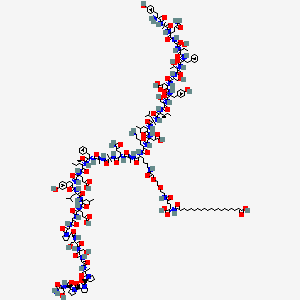
Retatrutide
Overview
Retatrutide (LY3437943) is an investigational peptide and a multi-receptor agonist designed to simultaneously engage the glucagon-like peptide-1 (GLP-1), glucose-dependent insulinotropic polypeptide (GIP), and glucagon (GCGR) receptors.
Its triple agonist design builds on laboratory work with dual GLP-1/GIP agonists, such as tirzepatide, by incorporating glucagon receptor activation as a third mechanism to study effects on energy expenditure and hepatic lipid handling in research models.
Research into incretin biology has included single-target compounds (e.g., GLP-1 agonists), dual agonists (e.g., GLP-1/GIP), and now triple agonists like retatrutide, which are used as tools to probe how simultaneous modulation of complementary metabolic pathways alters energy balance in experimental settings.
Retatrutide is also studied in research contexts related to type 2 diabetes and metabolic dysfunction-associated steatohepatitis (MASH), where glycemic and hepatic lipid pathways are of interest.
Mechanism of Action
Retatrutide acts through simultaneous activation of three G-protein coupled receptors that have distinct roles in metabolic signaling.
GLP-1 Receptor Activation
GLP-1 receptor activation on pancreatic beta cells enhances glucose-dependent insulin secretion, a mechanism studied for its role in glycemic modulation. GLP-1 signaling also slows gastric emptying, which moderates the rate of nutrient absorption in the small intestine.
GIP Receptor Activation
In metabolic research models, GIP receptor signaling produces complementary effects. GIP acts on adipose tissue in pathways related to lipid handling and insulin sensitivity, and may exert central nervous system effects on energy homeostasis that are additive with GLP-1 signaling.
Laboratory research suggests GIP can act synergistically with GLP-1 on pancreatic insulin secretion. It is also investigated for its roles in bone biology and the maintenance of energy expenditure during periods of negative energy balance.
Glucagon Receptor Activation
The glucagon receptor component is a distinguishing feature of retatrutide. In research models, glucagon receptor signaling is associated with increased energy expenditure through thermogenic pathways.
Glucagon signaling also promotes hepatic fatty acid oxidation and has been observed to reduce intrahepatic lipid accumulation in MASH/NAFLD research models. It is also studied for its effects on peripheral lipid oxidation in skeletal muscle and other tissues.
Balanced Triple Receptor Signaling
A key area of investigation for retatrutide is the functional balance among the three receptor activities. Glucagon receptor activation is known to increase circulating glucose, while concurrent GLP-1 receptor activation acts through multiple mechanisms that have an opposing effect.
Research Findings
Published nonclinical literature relevant to this material's molecular targets and experimental models is listed below for independent review. Findings involving other preparations or experimental systems should not be attributed to this research material.
Research Applications
- MASH / NAFLD research
- Triple receptor agonism
- Energy expenditure and thermogenesis
- Hepatic lipid metabolism
- Cardiovascular marker studies
- Multi-agonist peptide studies
- Glucose homeostasis studies
- Insulin sensitivity research
Laboratory Handling & Limitations
This material is supplied solely for in vitro and other nonclinical laboratory research. It is not for human or veterinary use, consumption, administration, therapeutic use, or diagnostic use.
Laboratory Handling
Handle only in an appropriately equipped laboratory using applicable institutional procedures, personal protective equipment, and the storage conditions shown for the material. The purchaser is responsible for study design, handling controls, disposal, and regulatory compliance.
Research Limitations
Published observations involving other preparations, experimental systems, or study populations do not establish the identity, performance, or suitability of this research material for any particular experiment.
Scientific References
Research Use Only
This product is intended for research purposes only and is not for human consumption, therapeutic use, or diagnostic applications. Please ensure compliance with all applicable regulations and institutional guidelines.