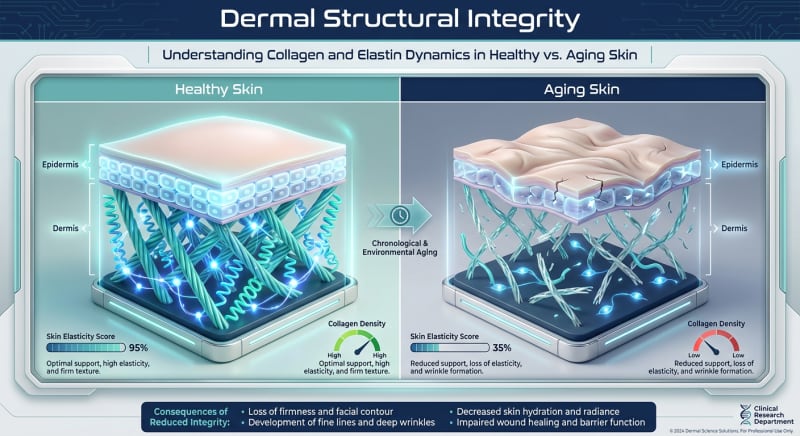
Dermal Structural Integrity: Evaluating SNAP-8 and GHK-Cu in Extracellular Matrix Resynthesis Research
Discover how the synergy of SNAP-8 and GHK-Cu peptides restores youthful skin structure. Learn exactly how they target expression lines and boost collagen production for undeniable anti-aging results.
The Evolution of Anti-Aging: Moving Beyond Cosmetic Illusions
If you're reading this, you are likely part of a growing movement of individuals who are redefining what it means to age. For decades, the standard approach to maintaining youthful skin essentially boiled down to slathering heavy creams on the surface to trap moisture or pursuing invasive procedures to freeze the face into submission. While those methods can create temporary cosmetic illusions, they don't solve the core issue. They don't fix the underlying architecture of your skin.
Today, health-conscious consumers are asking deeper questions. We don’t just want to know how to hide fine lines; we want to know what actually keeps a youthful face looking firm, bouncy, and resilient naturally. We are shifting our focus away from quick fixes and turning our attention to cellular health and structural restoration.
Enter the world of advanced peptide research. Peptides are tiny proteins, composed of short chains of amino acids, that act as highly specific messengers in the body. When applied to the conversation of skin aging, peptides are revolutionizing our approach. Instead of masking damage, specific peptides can instruct the skin to act younger, rebuild its internal scaffolding, and gently reduce the biological strain of daily facial movements.
In this comprehensive guide, we are looking specifically at two of the most celebrated and scientifically intriguing peptides in skin care research today. The first is SNAP-8, a remarkable compound designed to relax the repetitive facial muscle contractions that carve wrinkles into our skin over time. The second is GHK-Cu, a legendary copper peptide proven to reignite the genetic machinery responsible for producing youthful structural proteins.
Together, they offer a masterclass in what scientists call "dermal structural integrity"—the biological foundation of firm, unwrinkled, radiant skin. Let's explore exactly how these two peptides work, how they target entirely different mechanisms of aging, and how their synergy provides one of the ultimate blueprints for graceful, optimized aging.
Decoding Your Skin’s Anatomy: The True Source of Youth
Before we can truly appreciate the genius of peptides like SNAP-8 and GHK-Cu, we have to talk about what skin actually is. Skin is not just a canvas; it is a highly active, living, breathing organ. It is a bustling metropolis of cellular activity, constantly building, repairing, and shedding.
To keep things simple, let’s look at the two primary layers that dictate how young your face looks: the epidermis and the dermis.
The epidermis is the outermost layer. Think of it as the roof of a house. Its primary job is defense. It keeps pathogens, pollution, and the elements out, while trapping vital moisture inside. When your epidermis is compromised, your skin looks dull, dry, and feels rough to the touch. However, while the epidermis is important, it is not where wrinkles form.
The real magic happens beneath the surface, in the layer known as the dermis. If the epidermis is the roof, the dermis is the solid wooden framework and concrete foundation holding the entire house up. This layer houses nerve endings, blood vessels, hair follicles, and, most importantly, the structural proteins that give skin its firmness and elasticity.
When we talk about anti-aging and reversing wrinkles, the dermis is our primary target. Without a strong dermal foundation, the epidermal roof eventually caves in, creating what we see in the mirror as a wrinkle, sag, or crease.
The Extracellular Matrix (ECM): Your Face's Scaffolding
Within the dermis lives a complex, gel-like network known as the Extracellular Matrix, commonly referred to as the ECM. The ECM is the holy grail of skin science. It provides the literal architectural scaffolding that keeps your skin smooth, tight, and lifted.
The Extracellular Matrix is primarily constructed from three critical components:
- Collagen: The strong, rigid cables of protein that provide structural support and volume. Collagen stops your skin from sagging and tearing.
- Elastin: The stretchy rubber bands that allow your skin to snap back into place after you smile, frown, or pinch your cheek.
- Hyaluronic Acid and Glycosaminoglycans (GAGs): The moisture-binding jelly that fills the empty spaces between the collagen and elastin, keeping the skin hydrated, plump, and bouncy.
In your twenties, your ECM is a bustling construction site. Specialized cells known as fibroblasts are constantly manufacturing fresh collagen and elastin. Your skin is thick, resilient, and recovers from expressions or minor damage instantly.
Unfortunately, as we transition into our thirties, forties, and beyond, this construction site slows down dramatically. The fibroblasts become sluggish. The production of collagen and elastin plummets. To make matters worse, enzymes called matrix metalloproteinases (MMPs) begin actively breaking down the existing structural proteins faster than your body can replace them.
Why Our Skin Ages: Mechanical vs. Biological Breakdown
To effectively combat the loss of dermal structural integrity, we need to understand the two simultaneous wars being waged against our youthful skin. These are mechanical aging and biological aging. They work together in a vicious cycle.
Mechanical Aging refers to the wear and tear caused by movement. Every time you smile, laugh, squint in the sun, or furrow your brow in frustration, the muscles underneath your skin contract. These muscles pull the skin inward, creating temporary dynamic wrinkles.
In young, healthy skin, high levels of elastin allow the tissue to instantly snap back to its smooth state. But as the structural proteins degrade over time, the skin loses this bounce. Over decades of repetitive folding, these temporary dynamic wrinkles eventually turn into deeply etched, permanent static wrinkles. You commonly know these as crow's feet, forehead lines, and the "elevens" between your eyebrows.
Biological Aging, on the other hand, is the internal cellular shutdown. It is the slowing of the fibroblast activity, the loss of collagen, and the decline of regenerative signals. This is driven by intrinsic factors, like your genetic clock and natural hormone shifts, as well as extrinsic factors, like sun exposure, pollution, stress, and poor diet.
Biological aging weakens the ECM, making the skin thinner and more fragile. When thin, fragile skin is subjected to constant mechanical folding, deep wrinkles are born. To truly rejuvenate the skin, you have to address both the mechanical folding and the biological breakdown.
This brings us to the targeted peptide solutions. SNAP-8 addresses the mechanical breakdown. GHK-Cu addresses the biological breakdown.
SNAP-8: The Science of Relaxing Expression Lines
Let's talk about mechanical breakdown and how we can stop dynamic wrinkles from becoming permanent canyons on our faces. Most people assume the only way to stop facial muscle contraction is through harsh clinical neurotoxins.
While compounds like Botulinum Toxin have proven highly effective for completely freezing muscle movement by paralyzing the nerve-muscle connection, not everyone wants such a drastic, invasive approach. Many people desire to maintain natural facial expressions without the stiff, frozen look, while still dramatically softening their forehead lines and crow's feet.
This is where Snap-8 comes into play. SNAP-8, scientifically known as Acetyl Octapeptide-3, is a synthetic peptide that represents the absolute cutting-edge of non-invasive, topical line relaxation.
SNAP-8 is actually an upgraded, elongated version of a famous peptide called Argireline (Acetyl Hexapeptide-8). Researchers took the six-amino-acid chain of Argireline and extended it to eight amino acids, resulting in a peptide that boasts significantly deeper penetration and roughly 30% more efficacy in reducing wrinkle depth.
How SNAP-8 Intercepts The Wrinkle Signal
To understand the genius of SNAP-8, we have to look briefly at how a muscle actually knows when to contract. The process involves something called the SNARE complex.
Imagine your brain sending a text message to your facial muscle, telling it to squint because the sun is bright. The brain sends an electrical impulse down the nerve. When the impulse reaches the end of the nerve, it needs to cross a small gap to reach the muscle. To cross this gap, the nerve releases a chemical messenger known as a neurotransmitter (specifically, acetylcholine).
However, the neurotransmitter doesn't just spill out randomly. It is packaged neatly inside small biological bubbles called vesicles. For these bubbles to bond to the edge of the nerve cell and release their chemical messengers, a special group of proteins must lock together like a highly specific key in a lock. This lock-and-key formation is the SNARE complex.
If the SNARE complex cannot form, the bubble cannot release acetylcholine. If acetylcholine is not released, the muscle never receives the text message to contract.
Attenuating, Not Paralyzing
Here is where SNAP-8 works its magic. The SNAP-8 peptide is cleverly designed to mimic one of the essential proteins required to build the SNARE complex. When SNAP-8 is absorbed into the skin, it essentially steps into the assembly line and takes the place of the real protein.
Because SNAP-8 is an imposter, the lock cannot turn. The SNARE complex is destabilized, and the release of the acetylcholine neurotransmitter is significantly reduced.
Notice the language here: it is reduced, not completely blocked. Unlike harsh clinical toxins that sever the connection entirely and paralyze the tissue, SNAP-8 gently attenuates the signal. It turns down the volume of the muscle contraction. You can still smile, express joy, and articulate your thoughts naturally, but the forceful, sharp folding of the skin is vastly diminished.
By softening the intensity of these daily muscle contractions, SNAP-8 gives the fragile skin above it a much-needed vacation. Instead of being harshly creased thousands of times a day, the skin can finally rest, allowing fine lines and wrinkles to smooth out visibly over a matter of weeks.
Real-World Benefits of SNAP-8
For the health-conscious consumer, integrating SNAP-8 into a routine offers profound advantages:
- Visible Wrinkle Reduction: Clinical studies and user reports commonly show significant decreases in the depth of lines around the eyes (crow's feet) and across the forehead.
- Non-Invasive Solution: It offers an alternative for those who dread needles or want to extend the lifespan of clinical treatments they already receive.
- Expressive Freedom: You maintain your natural charm and facial mobility, avoiding the notorious "frozen face" look.
- Preventative Care: By softening muscle pulls, younger individuals use it as a preventative measure to stop static wrinkles from ever forming in the first place.
GHK-Cu: The Copper Peptide Miracle for Tissue Resynthesis
If SNAP-8's job is to protect the skin from mechanical folding, then the job of the copper peptide GHK-CU is to fundamentally rebuild the biological structure of the dermal scaffolding.
GHK-Cu, or Copper Tripeptide-1, is arguably one of the most extensively researched and universally praised anti-aging peptides in existence. The story of GHK-Cu begins in 1973 when a brilliant researcher named Dr. Loren Pickart isolated this naturally occurring sequence of three amino acids (Glycyl-L-Histidyl-L-Lysine) bound to a single copper ion from human blood plasma.
Dr. Pickart made a fascinating discovery: young adults running in their early twenties had highly elevated levels of GHK-Cu circulating through their bodies (around 200 ng/mL). But by the time a person reached the age of sixty, those levels had plummeted dramatically (to about 80 ng/mL).
When scientists took old, sluggish liver tissue and exposed it to the youthful plasma rich with GHK-Cu, the old cells suddenly began to behave like young cells again. GHK-Cu wasn't just a basic nutrient; it was a powerful biological messenger that turned back the cellular clock.
The Master Programmer of mRNA Transcription
How does a simple three-amino-acid peptide completely revamp the behavior of aged skin? The answer lies in epigenetics and mRNA transcription. In simpler terms, GHK-Cu talks directly to your DNA.
Every cell in your body, including your dermal fibroblasts (the skin's construction workers), contains your full genetic code. As we age, certain genes—specifically those responsible for making healthy collagen and blocking inflammation—begin to get switched "off." Meanwhile, the genes responsible for tissue breakdown and scarring get switched "on."
GHK-Cu acts as the ultimate site manager. Through a process involving mRNA transcription, GHK-Cu sends a chemical signal into the nucleus of the fibroblast cell. It acts as a massive genetic reset button. Research has demonstrated that GHK-Cu can up-regulate or down-regulate over 4,000 distinct human genes, essentially resetting their expression back to a youthful state.
When applied to the skin, GHK-Cu specifically barks orders to the DNA to start building again. It significantly boosts the synthesis of Type I collagen (the rigid support cables) and Type III collagen (the flexible, youthful collagen often abundant in children). It also ramps up the production of elastin and hyaluronic acid, replenishing the depleted ECM scaffolding.
Remodeling the Matrix and Enhancing Blood Flow
GHK-Cu doesn't just pile new collagen on top of damaged tissue. One of its most magical properties is its ability to direct the skin's cleanup crew.
Remember those matrix metalloproteinases (MMPs) we mentioned earlier—the enzymes that break down skin? GHK-Cu brilliantly regulates these enzymes. It signals the MMPs to meticulously break down old, hardened, sun-damaged collagen and scar tissue. Once the broken debris is cleared away, GHK-Cu immediately stimulates the fibroblasts to lay down fresh, perfectly aligned structural proteins in its place. This is known as "tissue remodeling."
Furthermore, GHK-Cu is deeply involved in angiogenesis—the creation of new microscopic blood vessels. As we age, the microcirculation supplying our skin diminishes, causing the dull, pale look of aged tissue. By encouraging the growth of new capillary networks, GHK-Cu dramatically increases the delivery of oxygen and vital nutrients to the surface of the skin, resulting in an undeniable, vibrant, healthy glow.
Antioxidant Shielding and Inflammation Control
Chronic inflammation and free radical damage from UV rays and pollution act like rust on the cellular machinery of our face. GHK-Cu is an incredibly potent antioxidant that shields the skin from this damage.
It actively suppresses pro-inflammatory markers and boosts the skin's natural antioxidant defense systems, such as Superoxide Dismutase (SOD). By quieting the inflammatory "fire" smoldering under the skin, GHK-Cu ensures that the new collagen it builds is protected and allowed to thrive, leaving the face looking remarkably calm, clear, and evenly toned.
SNAP-8 vs. GHK-Cu: A Comprehensive Comparison
While both SNAP-8 and GHK-Cu are heralded as titans in peptide anti-aging biology, they act through wildly different pathways. A health-conscious consumer must understand these differences to set appropriate expectations.
Let's break down how these two heavyweights compare:
| Feature | SNAP-8 (Acetyl Octapeptide-3) | GHK-Cu (Copper Tripeptide-1) |
|---|---|---|
| Primary Mechanism | Destabilizes SNARE complex; attenuates nerve-to-muscle signals. | Modulates mRNA transcription; commands DNA to rebuild tissue. |
| Core Benefit | Relaxes facial expression lines (dynamic wrinkles). | Firms, plumps, and tightens sagging skin while reducing inflammation. |
| Target Area | Best for upper face: forehead lines, elevens, crow's feet. | Best for the entire face and neck: global laxity, dullness, overall aging. |
| Time to See Results | Rapid. Often visible within 2 to 4 weeks of consistent use. | Gradual. Skin remodeling requires cellular turnover; best at 8-12 weeks. |
| Skin Feel | Often described as a temporary feeling of smoothness or slight tension relief. | Noticeable increase in skin bounce, thickness, moisture, and "glow." |
As you can see, SNAP-8 is your immediate tactical defense against expression lines, essentially "pausing" mechanical wear. GHK-Cu is your long-term strategic investment, slowly but surely "rebuilding" the biological foundation from the bottom up.
The Power of Synergy: Why Modern Protocols Combine Both
If SNAP-8 stops the mechanical breakdown, and GHK-Cu fixes the biological breakdown, what happens if you use them together? In the world of peptide science, this is what we call synergy.
Trying to rebuild skin collagen without addressing the repetitive muscle folding is like trying to fix a crack in a wall while someone is constantly slamming the door. GHK-Cu can lay down brilliant, fresh collagen, but if your facial muscles are aggressively repeatedly folding that exact same spot hundreds of times a day, the skin will struggle to stay smooth.
Conversely, using only SNAP-8 to relax the muscles will soften the appearance of expression lines, but it won't address the fact that your overall skin is thinning, losing its youthful bounce, and succumbing to gravity.
By integrating both into an optimized routine, you create the perfect environment for youth restoration. SNAP-8 provides the muscle relaxation, taking the mechanical stress off the delicate tissue. With the skin finally given a chance to rest in a relaxed position, GHK-Cu swoops in like a master builder to rapidly repopulate the area with fresh collagen and hyaluronic acid.
For those researching comprehensive tissue restoration, exploring blended synergies is often the pinnacle of an anti-aging strategy. This is why advanced formulations, such as the GLOW Blend, exist—combining powerful connective tissue repair peptides with copper peptides to drastically accelerate overall healing and dermal radiance.
Advanced Peptides and Their Supportive Roles
While SNAP-8 and GHK-Cu hold the crown for structural restoration and wrinkle reduction, the peptide universe is vast and highly specialized. If your goal is ultimate optimization, it’s worth noting that systemic aging also influences skin quality.
For instance, peptides like Epithalon are deeply studied in the longevity community for their potential to influence telomerase activity—the biological clock inside our cells. By supporting healthy cellular longevity on a systemic level, the skin naturally benefits from an extended youthful state. While Epithalon is not a topical cosmetic like SNAP-8, it highlights how true anti-aging is a multi-faceted endeavor combining tactical local repair with broad biological optimization.
Applying the Science: What Real Results to Expect
When transitioning from aggressive clinical treatments or standard over-the-counter creams to a dedicated peptide protocol, managing expectations is key to long-term satisfaction.
Here is a realistic timeline of what everyday consumers experience when researching these compounds:
- Weeks 1 to 2: With SNAP-8, you may begin to notice a slight softening of the harshness in your forehead lines. The muscles won't feel frozen, but the etched lines will appear less severe in the morning. With GHK-Cu, early signs include a decrease in redness and an overall boost in skin hydration and "glow."
- Weeks 4 to 6: This is when the magic starts compounding. SNAP-8 should be showing distinct attenuation of crow's feet when you smile. Underneath, GHK-Cu has stimulated increased hyaluronic acid production, leading to noticeable "plumping" of the cheek and jawline skin. The texture of your face will feel much softer to the touch.
- Weeks 8 to 12 (and beyond): True dermal remodeling takes time. By month three, the GHK-Cu has successfully replaced damaged tissue with fresh collagen. You will notice significant improvements in skin elasticity (bounce). Meanwhile, SNAP-8's continuous use prevents the deepening of lines, leading to a profound, natural-looking youthfulness that creams simply cannot replicate.
The Importance of Quality in Peptide Research
As the massive benefits of peptides become mainstream, the market is unfortunately being flooded with low-grade, improperly synthesized products that are ultimately a waste of time and resources.
Peptides are notoriously fragile molecules. Their effectiveness relies completely on their purity, their structural stability, and the precision of their amino acid sequencing.
When exploring anti-aging compounds, you must act like a diligent scientist. Always insist on proper quality control standards. Look for suppliers who transparently share their COA (Certificate of Analysis), proving that an independent third-party laboratory has verified the exact purity and mass of the peptide in the vial.
The method of peptide synthesis matters deeply. Premium synthesis ensures the removal of toxic byproducts and degraded fragments, meaning your body receives the clean, potent messenger signal exactly as intended. Compromising on purity when dealing with cellular communication is simply never worth the risk.
Frequently Asked Questions (FAQs)
Can SNAP-8 completely replace Botox or neurotoxin injections?
It depends entirely on your aesthetic goals. If you desire a completely frozen, zero-movement forehead, traditional injections are still the standard route. However, if your goal is natural movement, softened expression lines, and avoiding needles, SNAP-8 is considered the holy grail alternative. Many consumers also use SNAP-8 in conjunction with injections to drastically prolong the effects and space out their expensive clinic visits.
Does GHK-Cu irritate the skin or cause purging?
Unlike strong retinoids or chemical peels that forcefully burn off the top layer of skin and cause aggressive peeling and purging, GHK-Cu acts via biological communication. It is notoriously soothing and anti-inflammatory. While sensitive skin should always be patched-tested, most users find GHK-Cu highly calming and restorative. Often, a brief "ugly duckling" phase can occur with tissue repair, but true irritation is rare.
Do these peptides have any side effects on the body?
Both SNAP-8 and GHK-Cu have deep safety profiles in chronological skin studies. Because SNAP-8 remains largely localized to the shallow muscles beneath the application site, it does not exert systemic effects. GHK-Cu is naturally identical to compounds already found in human plasma, meaning the body knows exactly how to metabolize it. They are widely regarded as exceptionally safe for adult skin restoration.
Can I use Vitamin C or Retinol at the same time as Copper Peptides?
This is a critical best practice in skin routines! Direct, strong acids like L-ascorbic acid (Vitamin C) can potentially degrade copper peptides and render them inactive if applied at the exact same moment. It is generally recommended to separate them. Using Vitamin C in the morning for antioxidant protection and GHK-Cu at night for cellular rebuilding is a highly effective, complementary strategy.
Do I have to use them forever to keep the results?
Aging is an ongoing condition. Peptides are not magical spells that stop time; they are biological commanders that fight back against time. If you stop using SNAP-8, your muscles will eventually resume their full force, and mechanical aging will continue. If you stop GHK-Cu, your internal genetic clock will eventually slow collagen production back down. Consistency is vital to maintaining the exceptional structural integrity these peptides provide.
Embracing the Renaissance of Skincare
We are standing in the midst of a regenerative revolution. Gone are the days of accepting profound collagen loss and deep mechanical wrinkles as merely an inevitable consequence of gravity and time.
By understanding the dual nature of aging—mechanical breakdown in the muscles and biological breakdown in the Extracellular Matrix—you now possess the blueprint for achieving actual dermal structural integrity.
SNAP-8 provides an extraordinary, needle-free shield against the daily wear and tear of expression lines through the elegant attenuation of the SNARE complex. GHK-Cu acts as the master architect, reaching deep into the dermis to reignite youthful genetic instructions, clearing out damaged debris, and filling the skin with vibrant, bouncy collagen and intense hydration.
Incorporating elite, pure peptide science into your life is no longer just for professional researchers. It is an accessible, profound strategy for an everyday health-conscious individual who wishes to look in the mirror and see a reflection that matches the vibrant, youthful energy they feel inside.
References
- 1. Pickart, L., Margolina, A. (2018). Regenerative and Protective Actions of the GHK-Cu Peptide in the Light of the New Gene Data. International Journal of Molecular Sciences, 19(7), 1987.
- 2. Blanes-Mira, C., et al. (2002). A synthetic hexapeptide (Argireline) with antiwrinkle activity. International Journal of Cosmetic Science, 24(5), 303-310.
- 3. Schagen, S. K. (2017). Topical Peptide Treatments with Effective Anti-Aging Results. Cosmetics, 4(2), 16.
- 4. Gorouhi, F., Maibach, H. I. (2009). Role of topical peptides in preventing or treating aged skin. American Journal of Clinical Dermatology, 10(5), 327-345.
- 5. Badenhorst, T., Svirskis, D., Merrilees, M. (2014). Effects of GHK-Cu on MMP and TIMP Expression, Collagen and Elastin Production, and Facial Wrinkle Parameters. Journal of Aging Science, 2(3).
- 6. Ruiz, M. A., et al. (2007). Acetyl octapeptide-3: A novel peptide for the treatment of expression wrinkles. Cosmetic Dermatology, 20(8), 498-503.
- 7. Pickart, L., et al. (2015). GHK Peptide as a Natural Modulator of Multiple Cellular Pathways in Skin Regeneration. BioMed Research International, 2015, 648108.
- 8. Tran, K. T., et al. (2004). Cellular mechanisms of tissue remodeling and regeneration via copper peptides. Wound Repair and Regeneration, 12(3), 262-268.
- 9. Aldag, C., Nogueira Teixeira, D., Leventhal, P. S. (2016). Skin rejuvenation using cosmetic products containing growth factors, cytokines, and peptides: a review of the literature. Clinical, Cosmetic and Investigational Dermatology, 9, 411–419.
- 10. Lupo, M. P., Cole, A. L. (2007). Cosmeceutical peptides. Dermatologic Therapy, 20(5), 343-349.
All research information is for educational purposes only. The statements made within this website have not been evaluated by the US Food and Drug Administration. The statements and the products of this company are not intended to diagnose, treat, cure or prevent any disease.