
5MG
Buy 3+ for $45.60 each and save 5%
Buy 5+ for $43.20 each and save 10%
Buy 10+ for $40.80 each and save 15%
This product is for research purposes only. Not for human consumption.
Purity: >98% (HPLC verified)
Formulation: Lyophilized powder
Molecular Formula: C37H51N9O10S
Molecular Weight: 813.93 g/mol
CAS Number: 80714-61-0
PubChem CID: 155977617
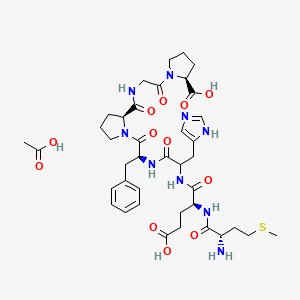
Semax
Overview
Semax is a synthetic heptapeptide with the sequence Met-Glu-His-Phe-Pro-Gly-Pro. It was developed at the Institute of Molecular Genetics of the Russian Academy of Sciences and Moscow State University in the 1980s. Its structure is based on the adrenocorticotropic hormone (ACTH) fragment ACTH(4-10), with modifications intended to alter its stability and activity.
ACTH is a peptide hormone, but research beginning in the 1970s suggested that certain N-terminal fragments possess properties that affect the central nervous system, independent of adrenal stimulation. Studies in animal models from that time indicated that ACTH fragments could influence learning and memory, suggesting direct CNS action.
Mechanism of Action
In various research models, Semax has been observed to act through multiple mechanisms involving neurotransmitter systems, neurotrophic factor expression, and gene expression.
BDNF Upregulation
BDNF binds to TrkB receptors, activating intracellular signaling cascades, including the MAPK/ERK, PI3K/Akt, and PLCγ pathways. These pathways are involved in neuronal survival, dendritic growth, and synaptic plasticity.
Neurotransmitter Modulation
Semax has been reported to modulate several neurotransmitter systems. Studies suggest it can influence dopaminergic neurotransmission in regions like the striatum and prefrontal cortex. Research has also indicated effects on serotonergic systems and cholinergic systems, with some studies reporting effects on acetylcholine synthesis and release.
Neuroprotective Pathways
Transcriptomic studies have suggested that Semax can modulate the expression of a wide range of genes involved in processes like neuroplasticity, cellular stress response, immune function, and vascular function.
Research Findings
Published nonclinical literature relevant to this material's molecular targets and experimental models is listed below for independent review. Findings involving other preparations or experimental systems should not be attributed to this research material.
Research Applications
- Cognition and learning models
- Ischemia models
- Neuroprotection studies
- Attention and focus research
- Memory formation studies
- Stress and anxiety models
- Neurodegeneration models
- Cerebral circulation research
- Optic nerve function studies
- BDNF and neuroplasticity
- Neurotransmitter systems
- Neuropeptide research
Laboratory Handling & Limitations
This material is supplied solely for in vitro and other nonclinical laboratory research. It is not for human or veterinary use, consumption, administration, therapeutic use, or diagnostic use.
Laboratory Handling
Handle only in an appropriately equipped laboratory using applicable institutional procedures, personal protective equipment, and the storage conditions shown for the material. The purchaser is responsible for study design, handling controls, disposal, and regulatory compliance.
Research Limitations
Published observations involving other preparations, experimental systems, or study populations do not establish the identity, performance, or suitability of this research material for any particular experiment.
Scientific References
Research Use Only
This product is intended for research purposes only and is not for human consumption, therapeutic use, or diagnostic applications. Please ensure compliance with all applicable regulations and institutional guidelines.