
100MG
Buy 3+ for $42.75 each and save 5%
Buy 5+ for $40.50 each and save 10%
Buy 10+ for $38.25 each and save 15%
This product is for research purposes only. Not for human consumption.
Purity: ≥99% (HPLC verified)
Formulation: Lyophilized powder
Molecular Formula: C21H29N7O14P2
Molecular Weight: 663.43 g/mol
CAS Number: 53-84-9
PubChem CID: 5893
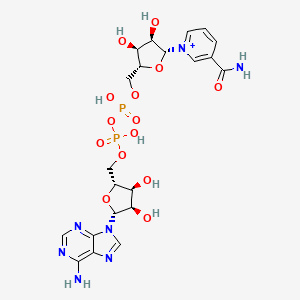
NAD+
Overview
NAD+ (nicotinamide adenine dinucleotide) is a coenzyme present in every living cell and one of the most heavily studied molecules in metabolic and aging research. It is required for fundamental biological processes including energy metabolism, DNA repair, cellular signaling, and the regulation of gene expression. Tissue NAD+ concentrations decline with age in multiple species, and this decline is a central hypothesis in current investigations of age-related metabolic and mitochondrial dysfunction.
The molecule cycles between an oxidized form (NAD+) and a reduced form (NADH), participating in hundreds of enzymatic reactions. In the electron transport chain this redox cycling underpins ATP production. Beyond redox chemistry, NAD+ is consumed as a substrate — not merely used as a carrier — by three enzyme families studied intensively in aging research: the sirtuins (SIRT1–7), the poly(ADP-ribose) polymerases (PARPs), and the ectoenzyme CD38.
Mechanism of Action
NAD+ operates through two functionally distinct roles that are frequently conflated. The first is redox cycling, in which NAD+ accepts electrons during nutrient catabolism to become NADH, which then donates those electrons to complex I of the electron transport chain. In this role the molecule is recycled rather than consumed, and the cellular NAD+/NADH ratio acts as a readout of metabolic state that influences glycolysis, the citric acid cycle, and fatty acid oxidation.
The second role is as a consumed substrate. Here NAD+ is cleaved, its nicotinamide moiety released, and the molecule must be resynthesized. This consumption is what links NAD+ availability to the signaling pathways described below, and it is why NAD+ pools can be depleted under conditions of genotoxic or inflammatory stress.
Sirtuin Activation
NAD+ is an obligate co-substrate for the sirtuins, a family of NAD+-dependent deacylases that remove acetyl and other acyl groups from histones and non-histone proteins. Through these reactions sirtuins influence gene expression, mitochondrial biogenesis via PGC-1α, circadian transcriptional feedback loops, and cellular stress responses. Because the reaction consumes NAD+ stoichiometrically, sirtuin activity is directly sensitive to NAD+ availability — the mechanistic basis for most NAD+ restoration hypotheses in aging research.
DNA Repair and PARP Activity
PARPs, particularly PARP1, detect DNA strand breaks and consume NAD+ to build poly(ADP-ribose) chains that recruit repair machinery. Under heavy DNA damage this activity can consume NAD+ rapidly enough to compete with sirtuins for the shared pool, a competition documented across multiple cellular models and one explanation for the observed link between genomic stress and metabolic decline.
CD38 and Age-Related Decline
CD38 is an NAD+-consuming glycohydrolase whose expression rises with age and with inflammatory signaling. Its increase is one of the better-characterized contributors to age-associated NAD+ depletion, and CD38 inhibition has become a research strategy in its own right, distinct from precursor supplementation.
Calcium Signaling and Salvage Synthesis
NAD+ is also converted to cyclic ADP-ribose (cADPR) and nicotinic acid adenine dinucleotide phosphate, second messengers that mobilize intracellular calcium stores. Resynthesis proceeds primarily through the salvage pathway, in which nicotinamide phosphoribosyltransferase (NAMPT) is the rate-limiting enzyme. NAMPT expression is itself circadian and declines in several aged tissues, so the balance between synthesis capacity and consumption demand — rather than either factor alone — determines the steady-state pool.
Research Findings
Published nonclinical literature relevant to this material's molecular targets and experimental models is listed below for independent review. Findings involving other preparations or experimental systems should not be attributed to this research material.
Research Applications
- Cellular metabolism and energy production research
- Mitochondrial function and biogenesis studies
- Sirtuin and NAD+-dependent enzyme research
- PARP activity and DNA repair mechanism studies
- CD38 and NAD+ consumption pathway research
- Aging biology and cellular senescence studies
- NAD+ precursor comparison research (NMN, NR, nicotinamide)
- Circadian rhythm and NAMPT expression studies
- Neurodegeneration and axonal survival models
- Metabolic dysfunction and glucose handling research
- Redox biology and NAD+/NADH ratio studies
Laboratory Handling & Limitations
This material is supplied solely for in vitro and other nonclinical laboratory research. It is not for human or veterinary use, consumption, administration, therapeutic use, or diagnostic use.
Laboratory Handling
Handle only in an appropriately equipped laboratory using applicable institutional procedures, personal protective equipment, and the storage conditions shown for the material. The purchaser is responsible for study design, handling controls, disposal, and regulatory compliance.
Research Limitations
Published observations involving other preparations, experimental systems, or study populations do not establish the identity, performance, or suitability of this research material for any particular experiment.
Scientific References
Research Use Only
This product is intended for research purposes only and is not for human consumption, therapeutic use, or diagnostic applications. Please ensure compliance with all applicable regulations and institutional guidelines.