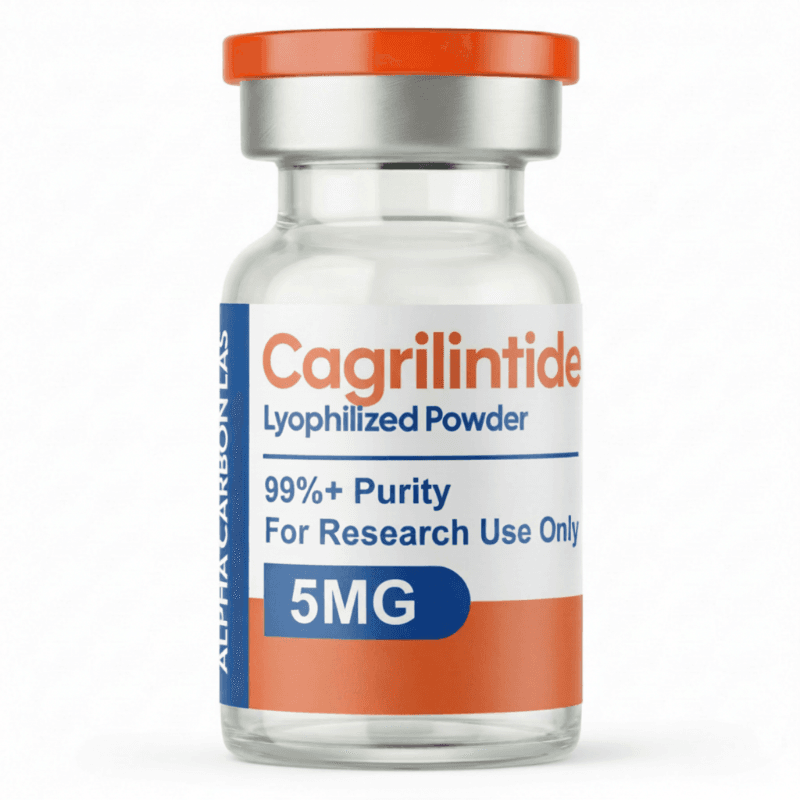
10mg (5mg/5mg)
Ships Today if ordered within 1 hr 36 min.
Buy 3+ for $118.75 each and save 5%
Buy 5+ for $112.50 each and save 10%
Buy 10+ for $106.25 each and save 15%
This product is for research purposes only. Not for human consumption.
Purity: >98% (HPLC verified)
Formulation: Lyophilized powder blend
Molecular Formula: C171H265N45O53S2 + C187H291N45O59
Molecular Weight: 3912.4 + 4113.64 g/mol
CAS Number: N/A / 910463-68-2
PubChem CID: N/A / 56843331
Research Contents
Cagrilintide + Semaglutide Blend
Overview
The Cagrilintide + Semaglutide Blend is a dual-peptide research formulation that pairs two complementary metabolic peptides — cagrilintide, a long-acting acylated amylin analog, and semaglutide, a GLP-1 receptor agonist — into a single 10mg lyophilized vial (5mg cagrilintide / 5mg semaglutide). This combination, sometimes referred to in the literature as CagriSema, has emerged as one of the most actively investigated next-generation approaches to research on appetite regulation, glycemic control, and body weight in metabolic disease models.
Cagrilintide acts on amylin receptors in the hindbrain to suppress appetite, slow gastric emptying, and reduce postprandial glucagon secretion. Semaglutide activates GLP-1 receptors throughout the pancreas, gastrointestinal tract, and central nervous system to enhance glucose-dependent insulin release, further slow gastric emptying, and reduce food intake through hypothalamic and brainstem circuits. Combining the two peptides allows researchers to investigate the synergistic effects of dual amylin and incretin pathway activation within a single, once-weekly compatible formulation.
Early-phase clinical research on the cagrilintide–semaglutide combination has reported substantially greater reductions in body weight than either peptide alone, generating significant interest in the dual-pathway approach as a research model for obesity, type 2 diabetes, and related metabolic conditions.
Mechanism of Action
The blend operates through two distinct but complementary signaling systems that converge on appetite, gastric, and glucose-regulatory pathways.
Cagrilintide — Amylin Pathway
Cagrilintide activates amylin receptors, which are heterodimeric complexes of the calcitonin receptor with receptor activity-modifying proteins (RAMPs) expressed in the area postrema, nucleus tractus solitarius, and hypothalamus. Activation produces satiety signals, slows gastric emptying, and suppresses inappropriately elevated postprandial glucagon. Acylation with a fatty acid side chain enables albumin binding and a half-life of approximately 5–7 days, supporting once-weekly administration.
Semaglutide — GLP-1 Pathway
Semaglutide binds GLP-1 receptors on pancreatic beta cells to drive glucose-dependent insulin secretion while suppressing glucagon release from alpha cells. In the gut, it slows gastric emptying through vagal and smooth muscle effects. Centrally, it crosses the blood–brain barrier to engage GLP-1 receptors in the arcuate nucleus and brainstem, modulating POMC neurons and other appetite-regulatory circuits to reduce food intake and cravings. Its acylation profile also enables albumin binding and a one-week half-life.
Synergistic Integration
Amylin and GLP-1 signaling target overlapping but mechanistically distinct nodes in the appetite, gastric, and glycemic control network. Cagrilintide's amylin-mediated satiety signal complements semaglutide's GLP-1–driven appetite suppression, while both peptides slow gastric emptying through different upstream mechanisms. The dual approach produces additive — and in research settings, often supra-additive — reductions in food intake and body weight compared to either pathway alone, while semaglutide's glucose-dependent insulinotropic action and cagrilintide's glucagon suppression jointly support more stable postprandial glucose handling.
Research Findings
Research on the cagrilintide–semaglutide combination has rapidly expanded since initial pharmacology studies established that the two peptides could be co-administered safely and produced additive effects on weight and glycemia.
Phase 1b and Phase 2 Combination Trials
Early Phase 1b research published in The Lancet evaluated escalating doses of cagrilintide co-administered with semaglutide 2.4 mg once weekly in adults with overweight and obesity. Combination dosing produced greater reductions in body weight than semaglutide alone over 20 weeks, with a tolerability profile broadly consistent with each component. A subsequent multicenter Phase 2 trial in participants with overweight or obesity reported approximately 15.6% mean body weight reduction at 32 weeks with cagrilintide 2.4 mg plus semaglutide 2.4 mg, compared to roughly 5.1% with placebo and lower percentages with either monotherapy.
Type 2 Diabetes Research
Phase 2 research in adults with type 2 diabetes (the REDEFINE program in development) has examined the combination's effects on HbA1c, body weight, and cardiometabolic markers. Reported data show clinically meaningful HbA1c reductions and weight loss exceeding semaglutide monotherapy in the same population, supporting continued Phase 3 investigation.
Mechanistic and Translational Studies
Preclinical research in rodent models has characterized the additive effects of amylin and GLP-1 receptor activation on hypothalamic appetite circuits, energy expenditure, and gastric emptying. Translational human studies have examined effects on appetite scores, ad libitum energy intake, gastric emptying rate, and glucose tolerance, providing mechanistic support for the combined use of the two peptides.
Ongoing Research
Phase 3 development programs (REDEFINE 1 and REDEFINE 2) are evaluating cagrilintide–semaglutide in obesity and type 2 diabetes populations, with cardiovascular and metabolic endpoints under active study. The combination remains an active area of investigation in metabolic medicine research.
Research Applications
- Obesity and body weight regulation research
- Type 2 diabetes and glycemic control studies
- Appetite and satiety pathway research
- Amylin and GLP-1 receptor signaling studies
- Gastric emptying and postprandial glucose research
- Combination peptide pharmacology studies
- Energy intake and food reward research
- Cardiometabolic risk factor studies
- Hypothalamic appetite circuit research
- Comparative metabolic peptide studies
Safety Profile
The safety profile of the cagrilintide + semaglutide blend draws on the substantial individual safety datasets for each peptide as well as growing combination data from Phase 1b and Phase 2 clinical research.
Gastrointestinal Effects
The most commonly reported adverse events in combination research are gastrointestinal, consistent with the mechanisms of both components. Nausea, vomiting, diarrhea, constipation, and decreased appetite have all been reported, with frequency and severity dependent on dose and titration schedule. Combination therapy has shown somewhat higher rates of GI events compared to either monotherapy, and slow, gradual dose titration significantly improves tolerability.
Glycemic Considerations
Hypoglycemia risk is low with either peptide as monotherapy due to the glucose-dependent action of semaglutide and the non-insulinotropic mechanism of cagrilintide. However, when combined with insulin or sulfonylureas in research models of diabetes, hypoglycemia risk increases and dose adjustments of background therapies are typically recommended.
Other Reported Effects
Injection site reactions, headache, fatigue, and dizziness have been reported infrequently. Pancreatitis and gallbladder events have been monitored across the GLP-1 class and remain rare. Semaglutide carries a class label warning regarding rodent thyroid C-cell tumors and is contraindicated in individuals with personal or family history of medullary thyroid carcinoma or MEN 2; this consideration applies to formulations containing semaglutide.
Research Use Only
Comprehensive long-term human safety data for the specific cagrilintide + semaglutide combination is still accumulating through ongoing Phase 3 trials. This product is intended solely for laboratory research purposes and is not approved for human or veterinary therapeutic use.
Scientific References
Customer Reviews
No reviews yet. Be the first to review this product!
Please sign in to write a review.
Research Use Only
This product is intended for research purposes only and is not for human consumption, therapeutic use, or diagnostic applications. Please ensure compliance with all applicable regulations and institutional guidelines.