
50MG
Buy 3+ for $52.25 each and save 5%
Buy 5+ for $49.50 each and save 10%
Buy 10+ for $46.75 each and save 15%
This product is for research purposes only. Not for human consumption.
Purity: >98% (HPLC verified)
Formulation: Powder
Molecular Formula: C9H15N4O8P
Molecular Weight: 338.21 g/mol
CAS Number: 3031-94-5
PubChem CID: 17513
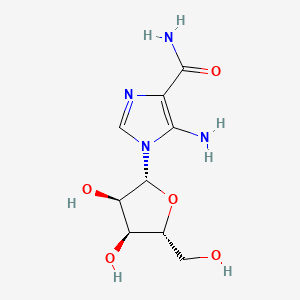
AICAR
Overview
AICAR (5-Aminoimidazole-4-carboxamide ribonucleotide), also known as acadesine, is a nucleoside analog that functions as a cell-permeable activator of AMP-activated protein kinase (AMPK). In research, it is often referred to as an "exercise mimetic" for its observed ability to activate metabolic pathways similar to those engaged during physical activity.
When taken up by cells, AICAR is phosphorylated to form ZMP (AICAR monophosphate). ZMP is an analog of AMP (adenosine monophosphate) and can activate AMPK, a key sensor of cellular energy status. This activation can occur even when cellular ATP levels are normal, inducing a metabolic state that resembles cellular energy depletion.
This leads to increased glucose uptake and fatty acid oxidation, stimulation of mitochondrial biogenesis, and the suppression of ATP-consuming anabolic processes.
Mechanism of Action
AICAR enters cells via nucleoside transporters and is phosphorylated by adenosine kinase to form ZMP (AICAR monophosphate). ZMP is a structural analog of AMP and binds to the γ subunit of the AMPK heterotrimeric complex. This binding induces a conformational change that facilitates phosphorylation of the catalytic α subunit at threonine 172 by upstream kinases, such as LKB1, leading to AMPK activation. This activation occurs even in the absence of a high AMP:ATP ratio.
Activated AMPK phosphorylates downstream target proteins involved in metabolism and gene expression. For example, AMPK phosphorylates and inactivates acetyl-CoA carboxylase (ACC), which reduces levels of malonyl-CoA. Since malonyl-CoA inhibits carnitine palmitoyltransferase 1 (CPT1), this action leads to an increase in fatty acid entry into mitochondria for oxidation.
AMPK activation also results in the translocation of GLUT4 glucose transporters to the cell surface in muscle and adipose tissue, increasing glucose uptake. At the transcriptional level, AMPK can phosphorylate coactivators like PGC-1α, influencing the expression of genes related to mitochondrial biogenesis and oxidative metabolism.
The net effect of AICAR-mediated AMPK activation is a shift in cellular metabolism toward ATP-generating catabolic pathways and away from ATP-consuming anabolic pathways, mimicking some of the metabolic adaptations observed with endurance exercise.
Research Findings
Published nonclinical literature relevant to this material's molecular targets and experimental models is listed below for independent review. Findings involving other preparations or experimental systems should not be attributed to this research material.
Research Applications
- AMPK pathway activation
- Metabolic disease models
- Exercise mimetic research
- Insulin resistance studies
- Mitochondrial biogenesis research
- Cellular energy metabolism studies
- Fatty acid oxidation research
- Skeletal muscle physiology studies
- Cardiovascular metabolism research
- PGC-1α regulation studies
Laboratory Handling & Limitations
This material is supplied solely for in vitro and other nonclinical laboratory research. It is not for human or veterinary use, consumption, administration, therapeutic use, or diagnostic use.
Laboratory Handling
Handle only in an appropriately equipped laboratory using applicable institutional procedures, personal protective equipment, and the storage conditions shown for the material. The purchaser is responsible for study design, handling controls, disposal, and regulatory compliance.
Research Limitations
Published observations involving other preparations, experimental systems, or study populations do not establish the identity, performance, or suitability of this research material for any particular experiment.
Scientific References
Research Use Only
This product is intended for research purposes only and is not for human consumption, therapeutic use, or diagnostic applications. Please ensure compliance with all applicable regulations and institutional guidelines.